
Photographing Tokyo’s Top Chefs for Virtuoso
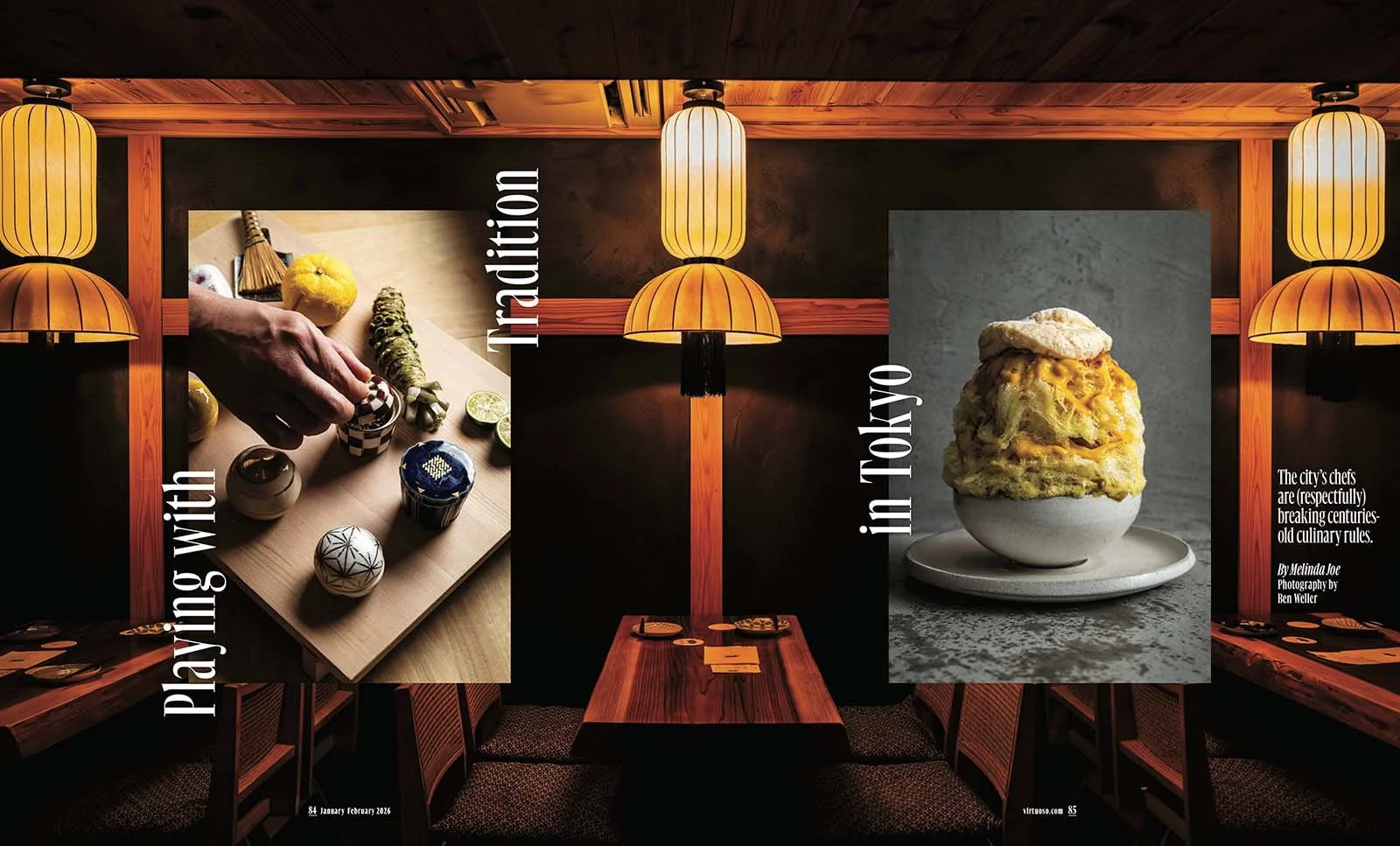
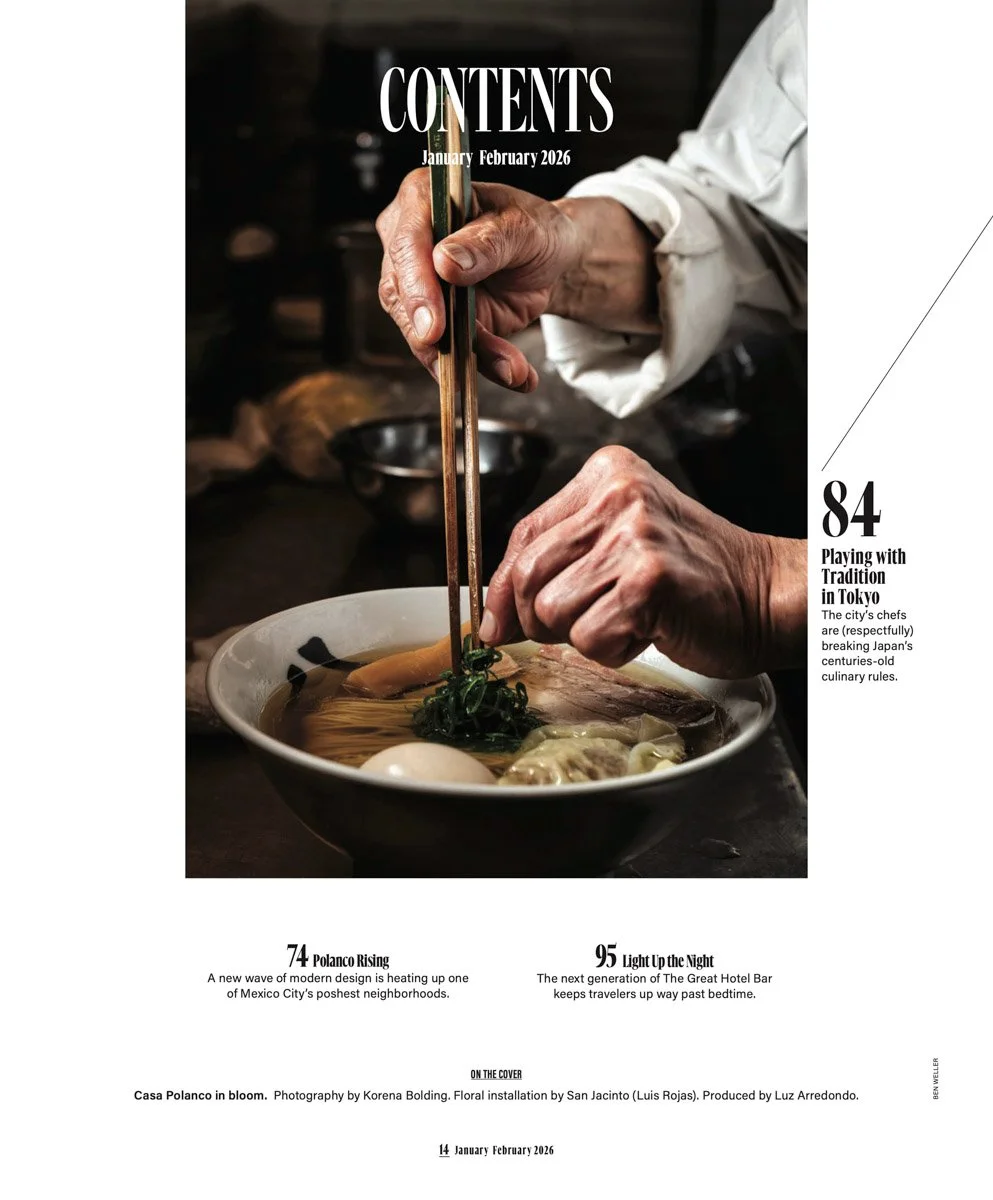
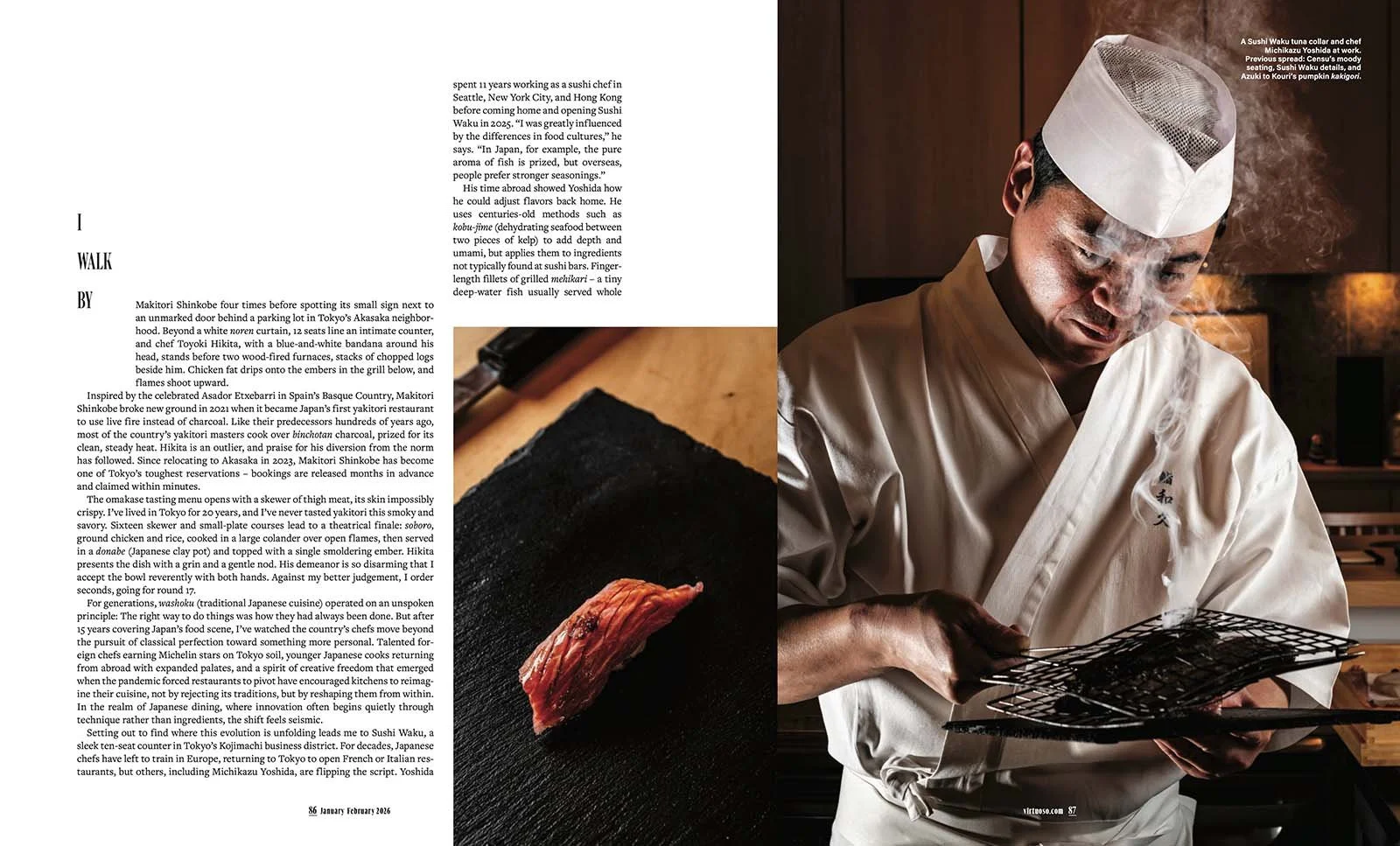
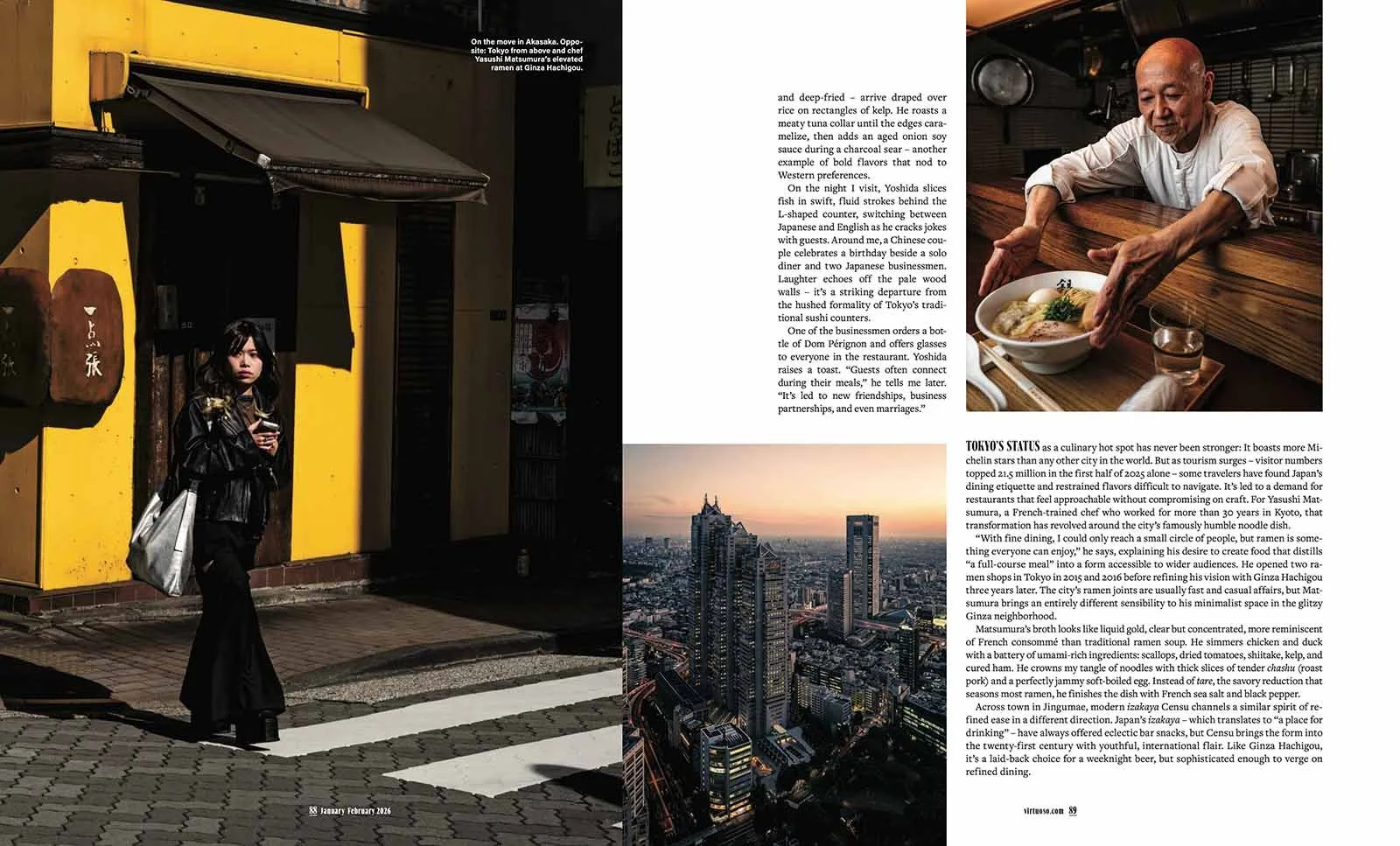
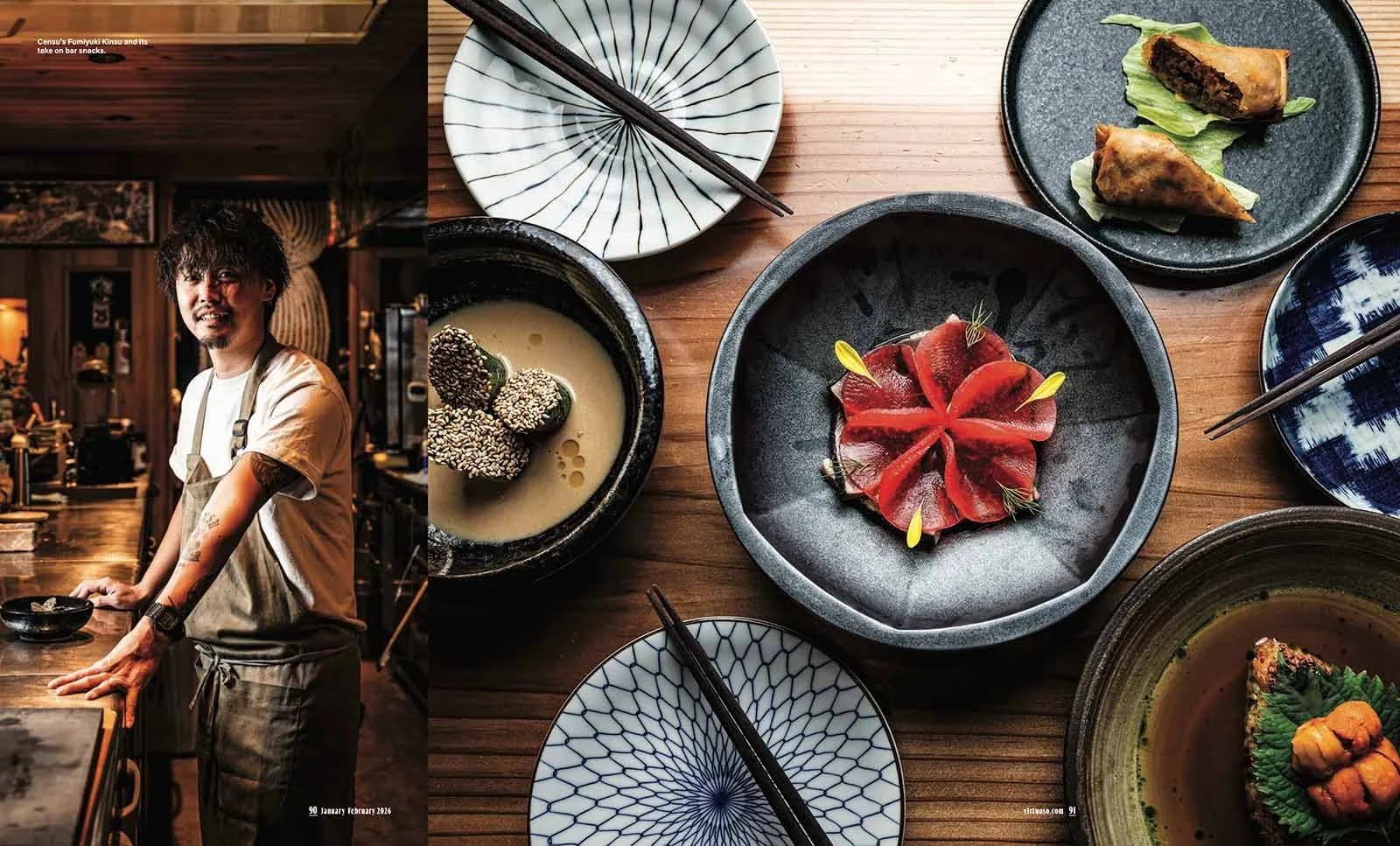
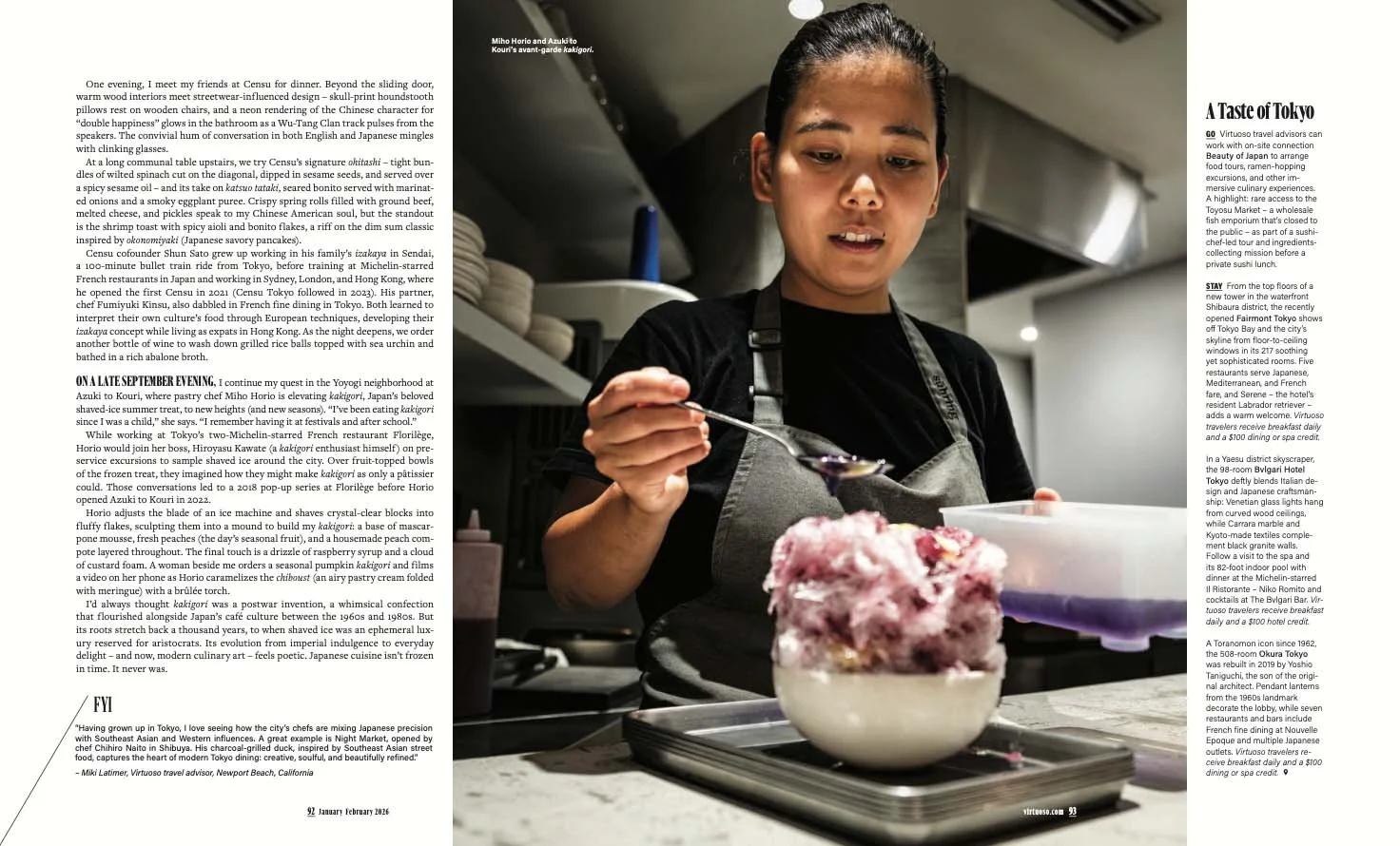
I recently completed a travel photography assignment for Virtuoso, The Magazine—one of the world's leading luxury travel publications—documenting Tokyo chefs who are redefining Japanese cuisine. The story, written by Melinda Joe, explores how four restaurants in Tokyo balance centuries-old tradition with creative innovation.
This is exactly the kind of work I love: assignments that go beyond surface tourism to document authentic cultural stories through food, craft, and the people who dedicate their lives to both.
Coordinating a Tokyo Food Photography Assignment
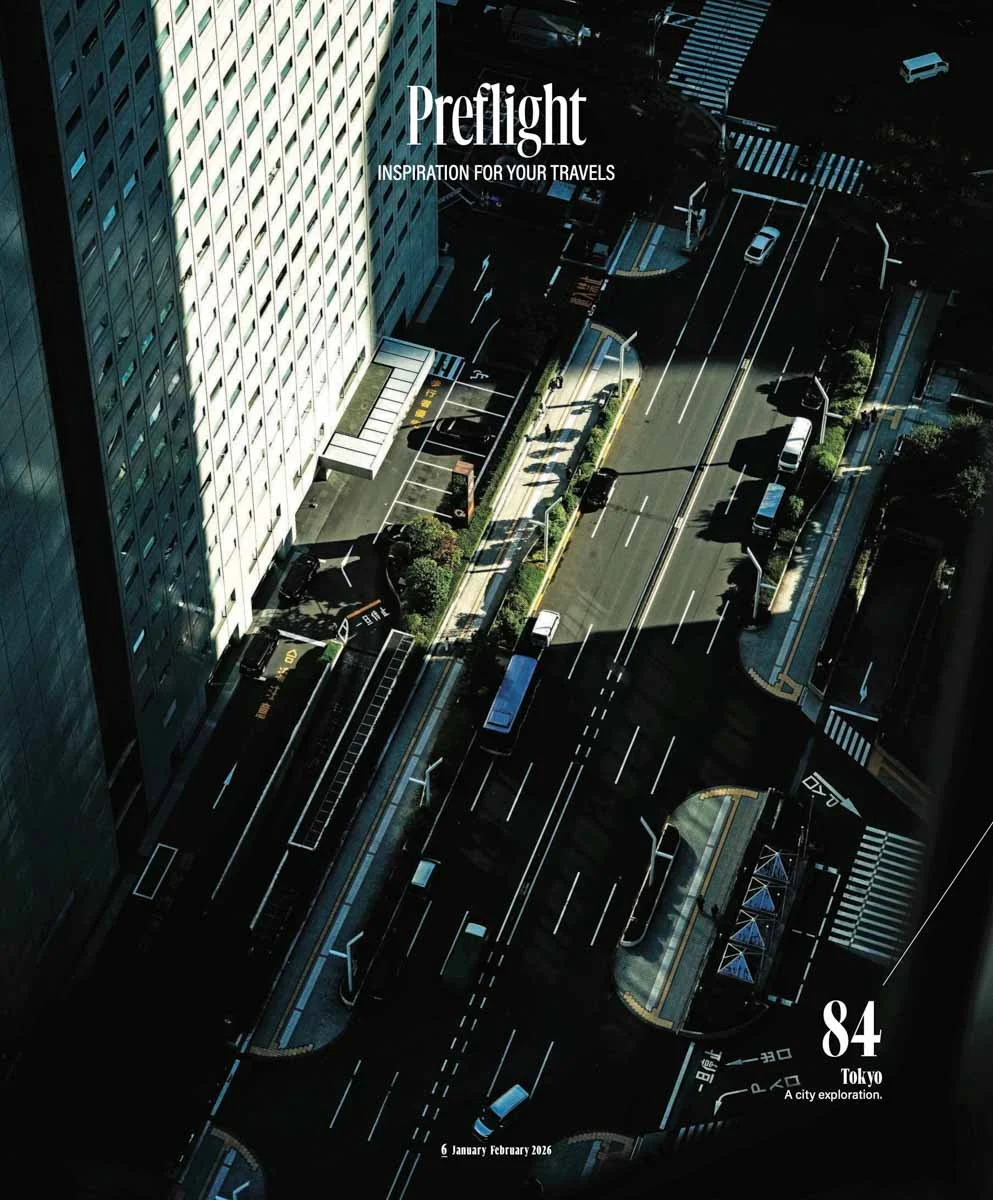
The assignment came with a two-week window to coordinate four restaurant shoots across Tokyo, plus general coverage of the neighborhoods where these establishments are located. As a travel photographer based just outside of Tokyo, I handled all the scheduling, working from a list of contacts to balance kitchen availability with the story's production timeline.
Securing access required a thoughtful approach. Some of these restaurants are booked months in advance. They don't need publicity, so I had to communicate carefully—making clear that I understand their work is a craft, that I respect how busy they are, and that I want to document what they do with care. I always send tearsheets of my previous work so chefs understand my style before shoot day. This approach creates a collaborative atmosphere rather than feeling like an interruption.
The Creative Challenge
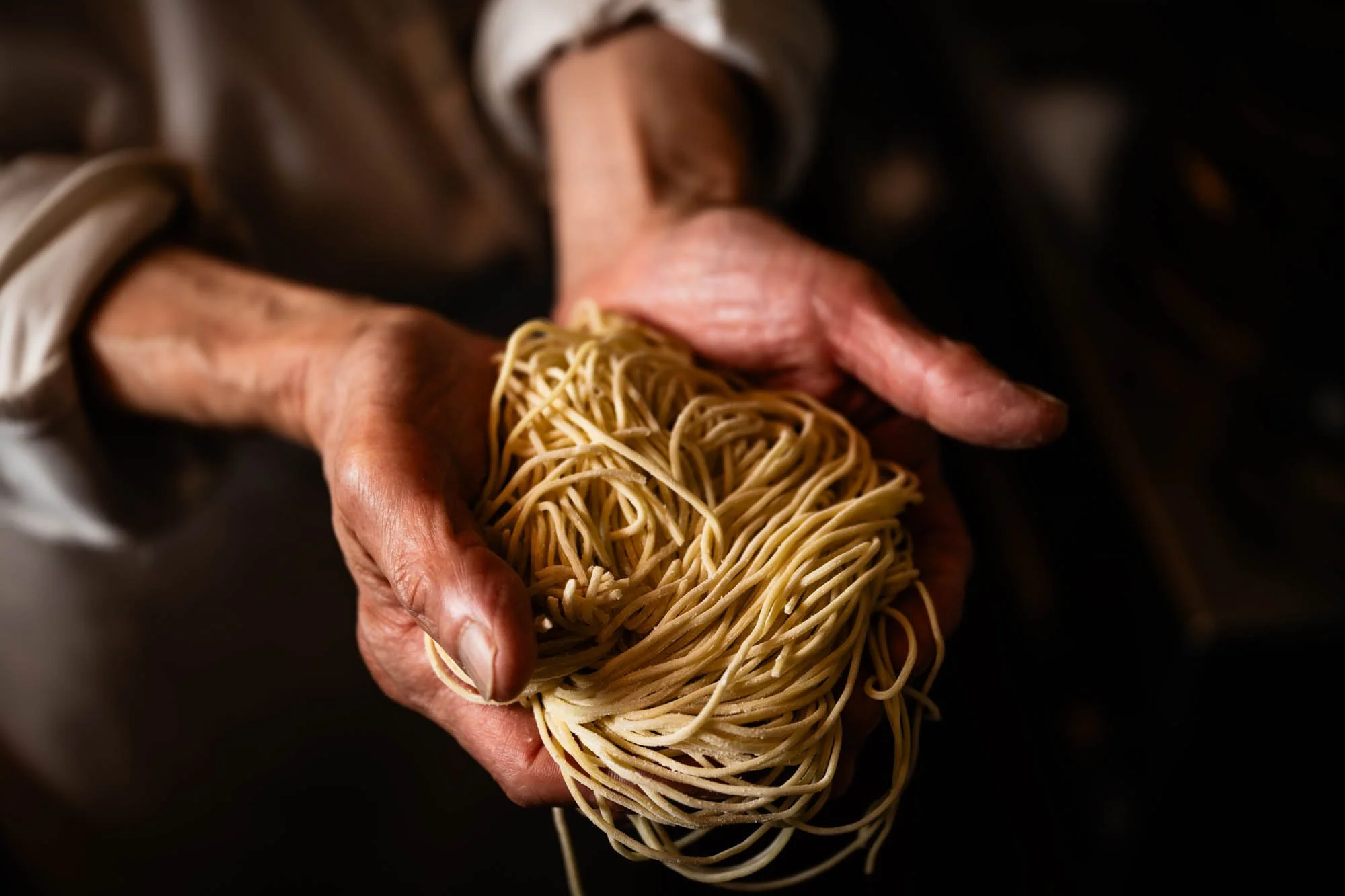
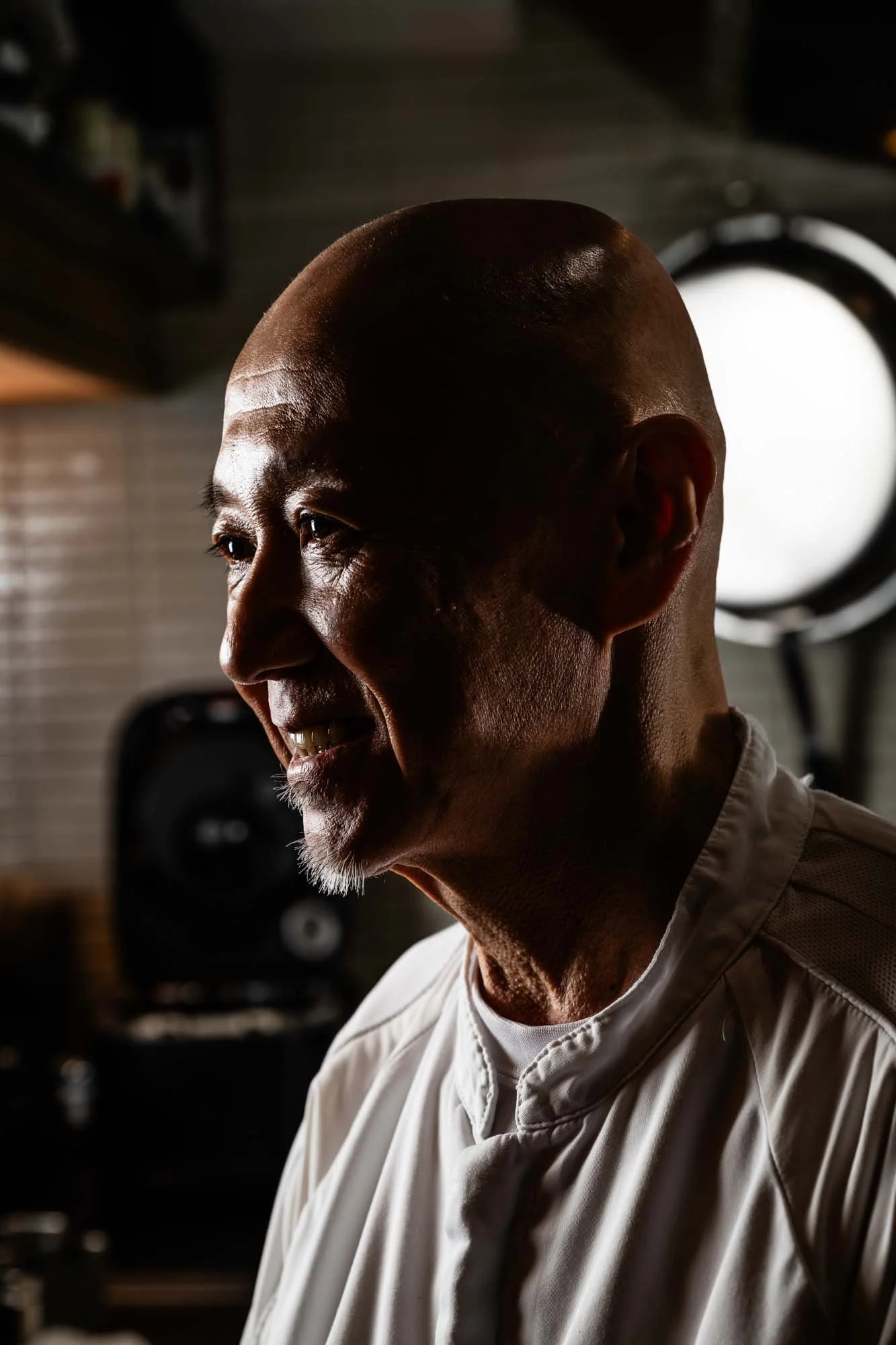
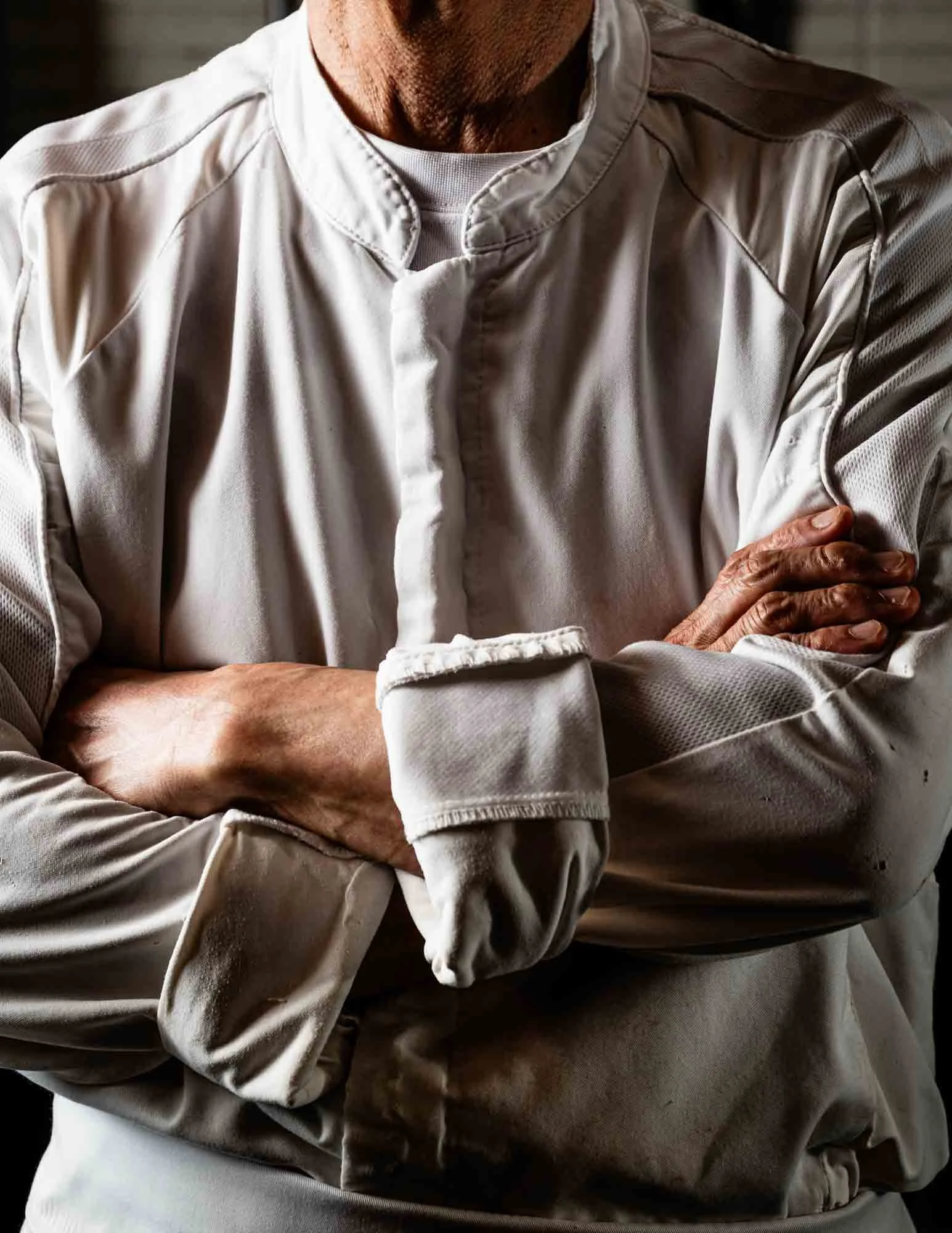
What I wanted to capture was the essence of each chef—play balanced with reverence. The careful attention they pay to each dish. The deft handling of technique and ingredient. These chefs aren't abandoning tradition; they understand it deeply enough to know when and how to push against it.
For travel photography assignments focused on food and hospitality, I approach the work as cultural documentation. It's about showing how people live, work, and create—which is what editorial travel photography should do at its best.
Lighting and Approach
Before any shoot begins, I discuss what's going to happen with the chef. What dish are we making? We’ll usually determine this beforehand, but it’s good to confirm. What are the ingredients? What are the steps in preparing it? Where will they be working, and will they move to different parts of the kitchen during the process? This conversation helps me understand the flow of the shoot and anticipate key moments.
Once I understand the plan, I take a few minutes to analyze the light in the space. Where can I position my softbox to best illuminate both the chef and the food? Where should the second strobe go—as a kicker to create separation with the subject, or to reveal another part of the kitchen and add depth to the frame? These decisions shape the look of the entire shoot. Consistency is key here as I’m shooting multiple restaurants and want a coherent look throughout the story.
For this assignment, I mostly used a two-light setup: a Nikon Z8 with the Nikkor 24-70mm lens and Godox speedlights. A 90cm softbox is standard in my kit for food photography work—it creates soft, clean light and ensures accurate color, which is essential when photographing food. Paired with speedlights, I can set it up, move it around, and break it down quickly on editorial shoots, giving me both quality and versatility.
The result is a setup where one strobe in the softbox lights the chef and their work, while a second strobe behind or to the side creates separation and illuminates the kitchen, adding layers to the composition. It's technical work, but the goal is always to make it feel natural—more like painting than documentation.
Working in Tokyo's Restaurant Scene
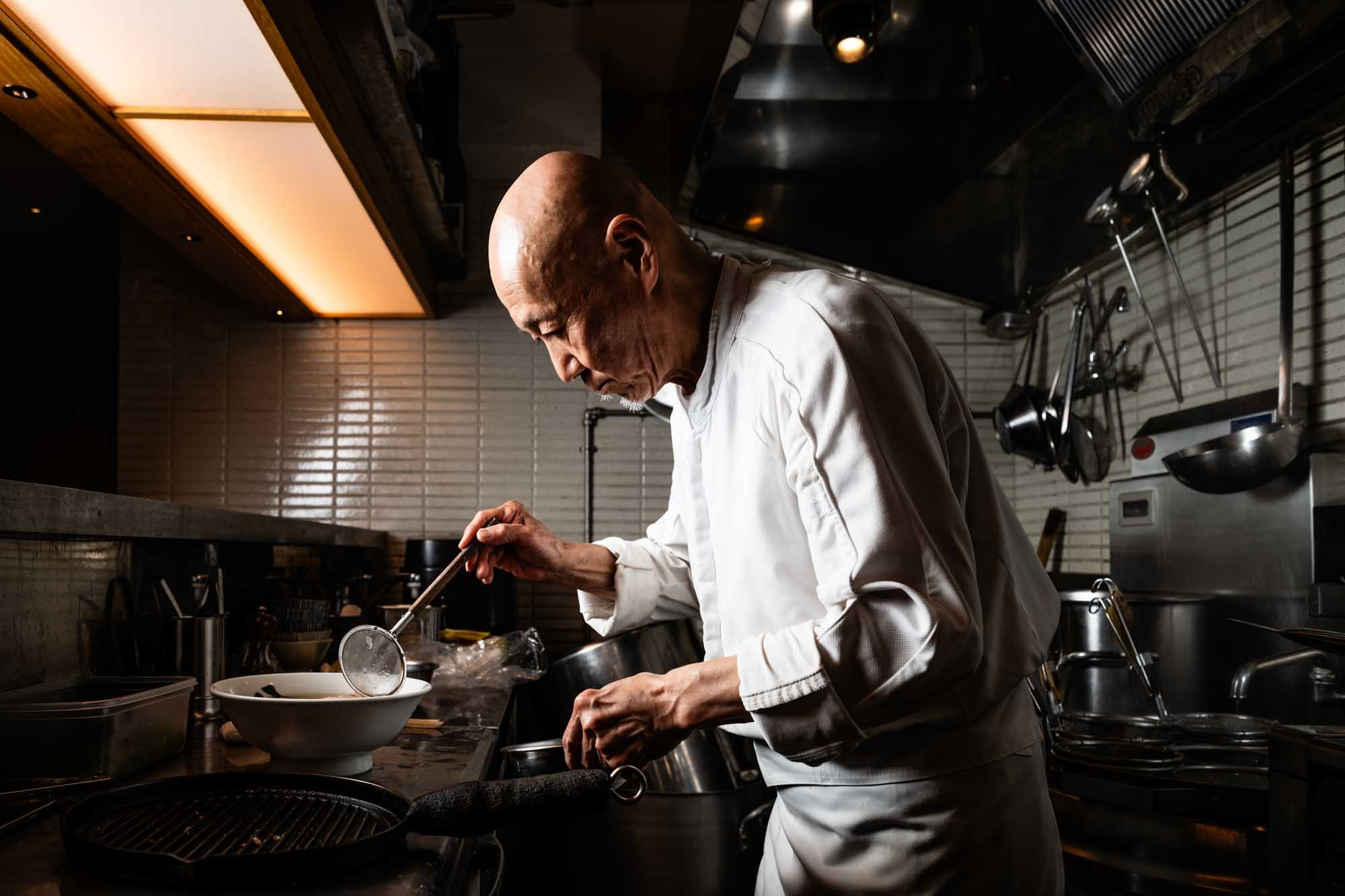
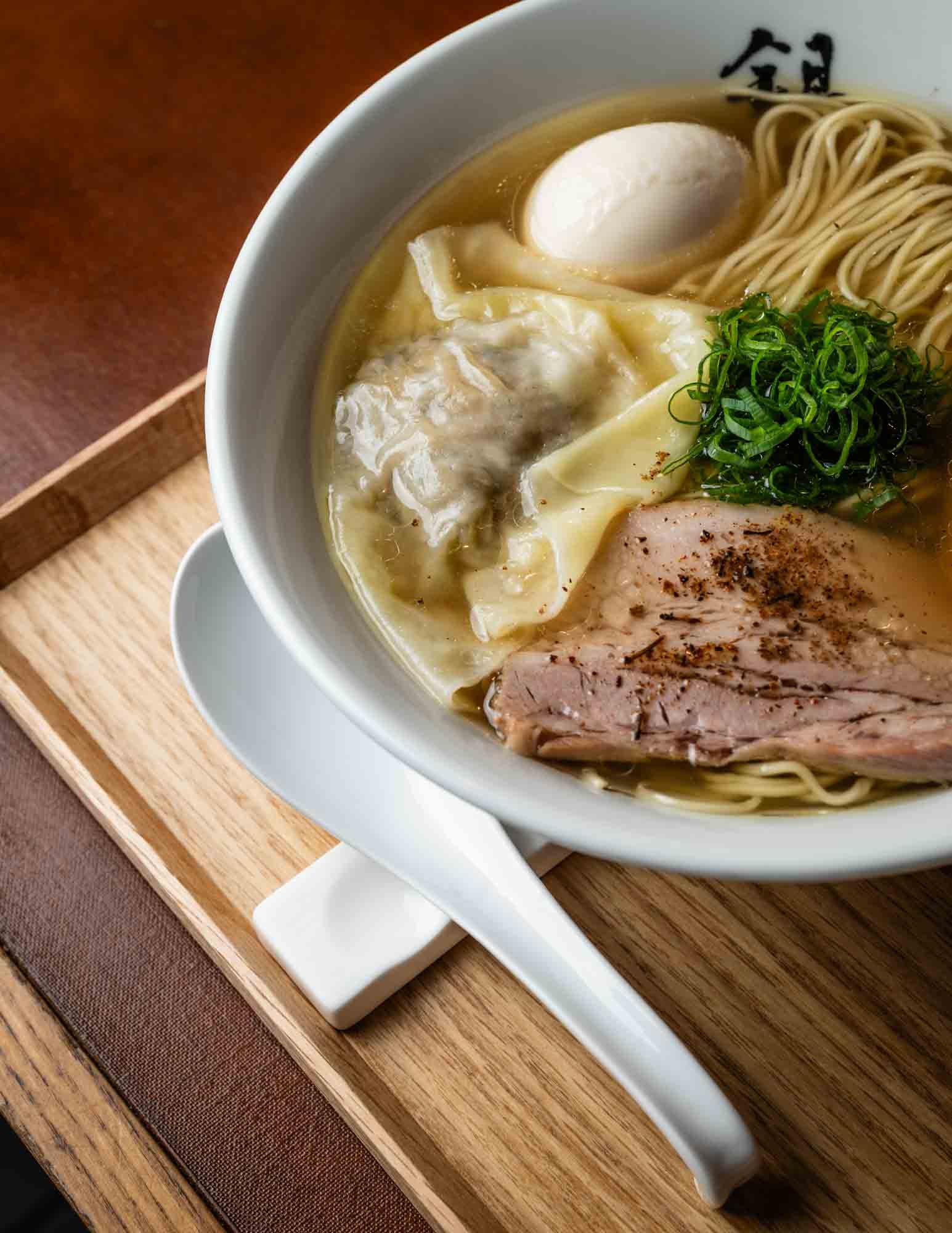
The food at every establishment was exceptional. The standout was the ramen at Ginza Hachigou. It was cold outside, the bowl was steaming hot, and it was one of the best things I've ever tasted. After I finished shooting, Matsura-san prepared a fresh bowl so I could sit and savor it properly. Given that many of these restaurants require hard-to-get reservations, this kind of access felt like a privilege.
I also enjoyed shooting at Censu, a trendy izakaya with a youthful energy. I worked to capture the contrast between precision in the kitchen and the relaxed atmosphere in the dining room—the interplay between staff and customers that gives the place its character.
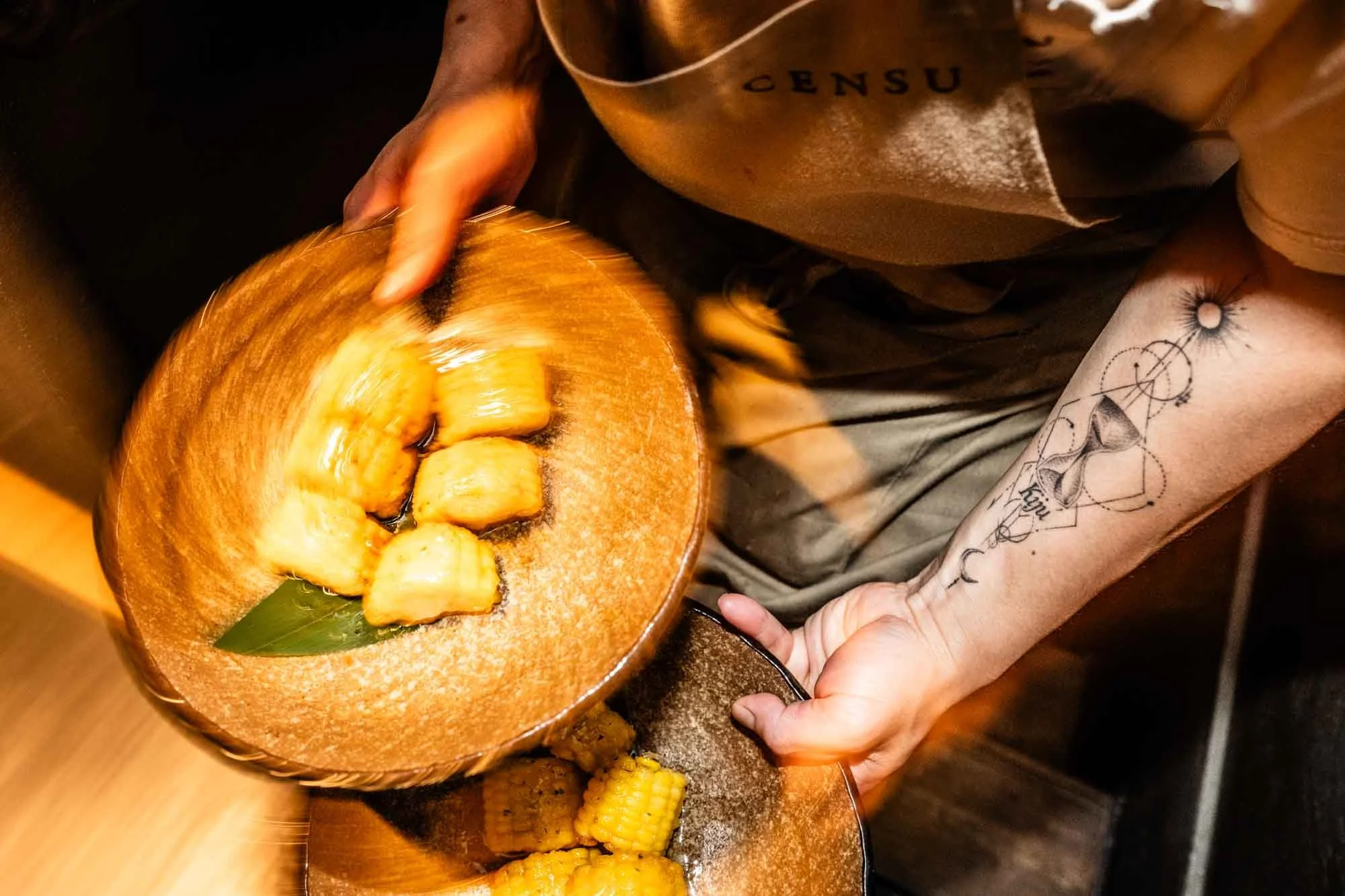
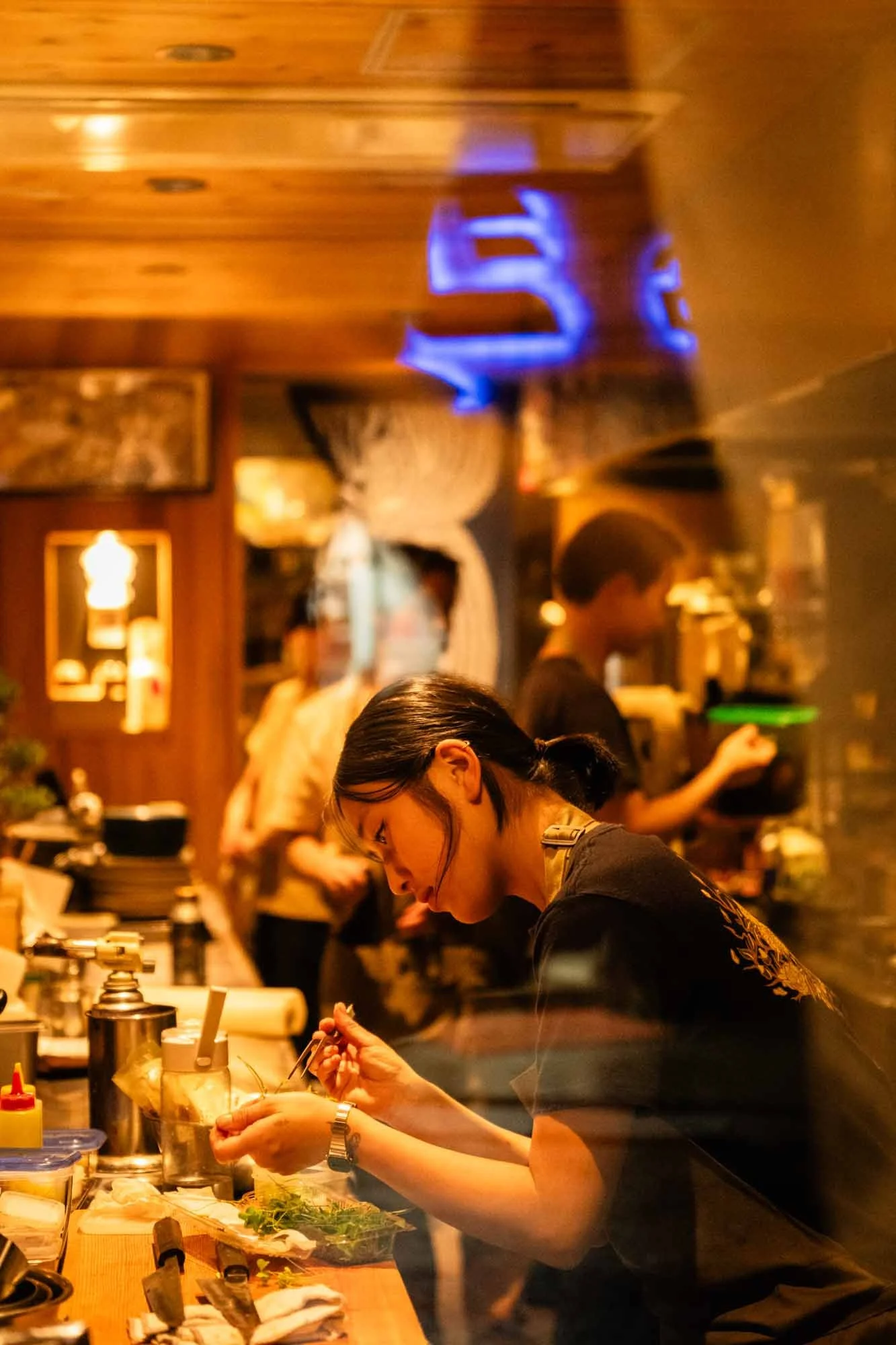
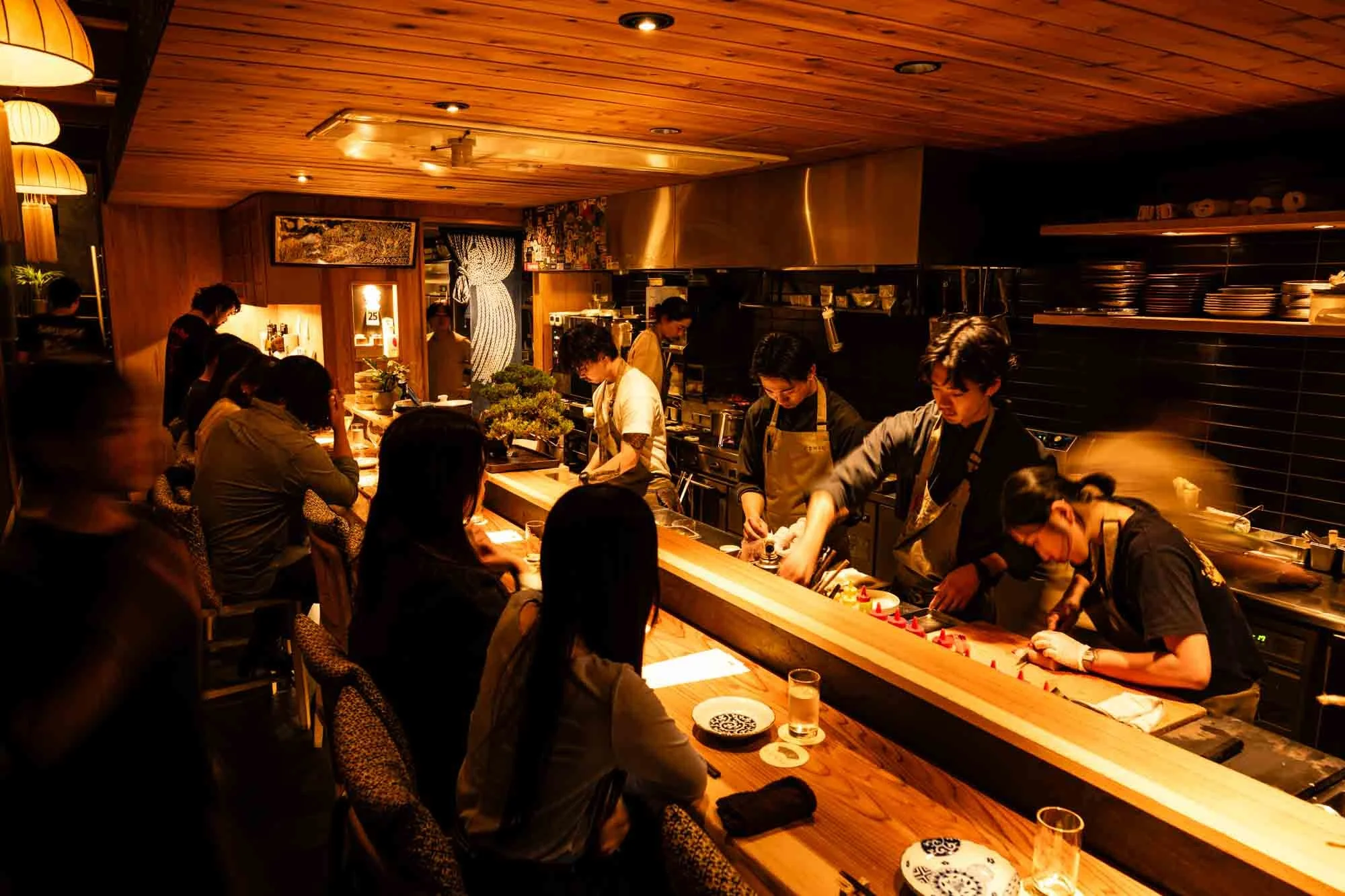
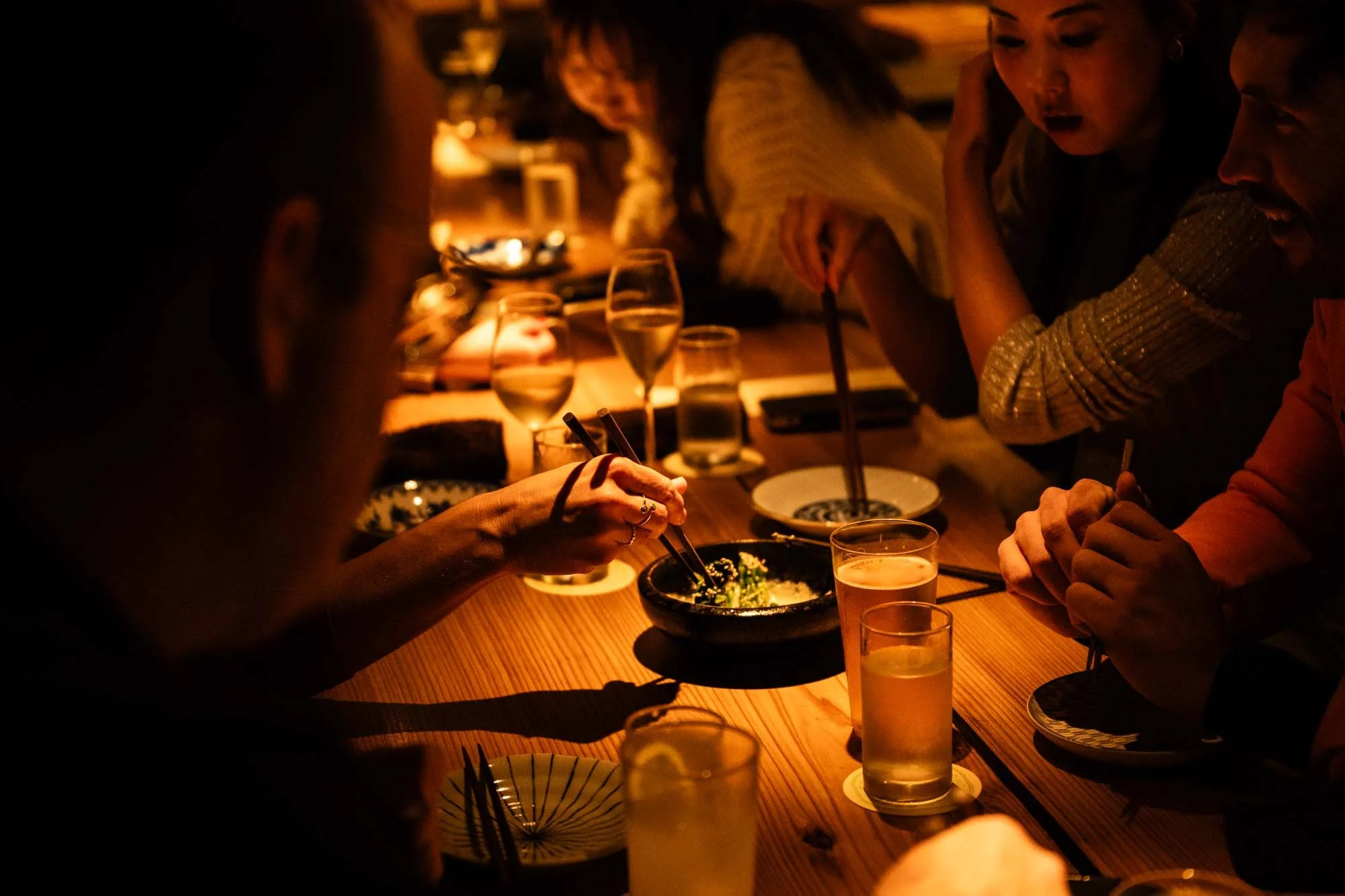
Working for over a decade as a travel photographer in Japan has given me the local knowledge and relationships that make assignments like this possible. I can navigate cultural nuances, communicate effectively in Japanese restaurant kitchens, and understand what makes a story feel authentic rather than superficial—advantages that make a difference when you're working with high-end establishments that value discretion and professionalism.
Collaboration and Design
I've had a longstanding relationship with Virtuoso, having shot seven or eight stories for them over the past six years. That kind of continuity matters—it means we understand each other's standards and working styles, which makes every assignment smoother and more productive.
Stories like this are team efforts. The photo editors, art director, and page designers at Virtuoso brought real care to this piece, and the final layout beautifully captured the spirit of these restaurants. Layout and design is essential to how photography gets presented—it can elevate the work or undermine it. This story did justice to both Melinda's writing and my images, which is what you hope for on every assignment.
Travel Photography Work in Japan
This Virtuoso assignment is representative of my travel photography work across Japan and East Asia—editorial assignments that combine cultural insight, technical execution, and storytelling that goes deeper than surface coverage. Whether documenting Tokyo chefs, Ama divers in Mie, or shooting hospitality properties for international brands, I approach each project as an opportunity to reveal something authentic about a place and the people who shape it.
View the full story: Some of the Best Restaurants in Tokyo Are (Respectfully) Breaking Centuries-Old Culinary Rules
For travel photography and editorial assignments in Japan and across Asia, contact me to discuss your project.
All images © Ben Weller. All rights reserved.
No part of these photographs may be copied, reproduced, stored, or used in any form—digital or print—without the express prior written permission of the photographer.