
Capturing Hatsuhinode: a Japan travel photographer's guide to shooting the first sunrise of the New Year
As an editorial photographer based in Japan, I’ve spent more than a decade documenting Japanese culture and traditions through my lens. One of my favorite annual assignments, both personal and professional, is photographing hatsuhinode, the Japanese custom of viewing the first sunrise of the New Year. It's a tradition that offers rich visual storytelling opportunities and connects deeply with the spirit of renewal that defines Japanese New Year celebrations.
Across the country on January 1st, people bundle up and head out early to watch the sunrise, often traveling to prime viewing spots. My local destination for hatsuhinode photography is the Shonan coast, stretching along Sagami Bay in Kanagawa Prefecture. This area has some of Japan's best beaches for sunrise photography, offering stunning views of the sun rising over the Pacific in the east while lighting up the snow-covered peak of Mt. Fuji in the west.
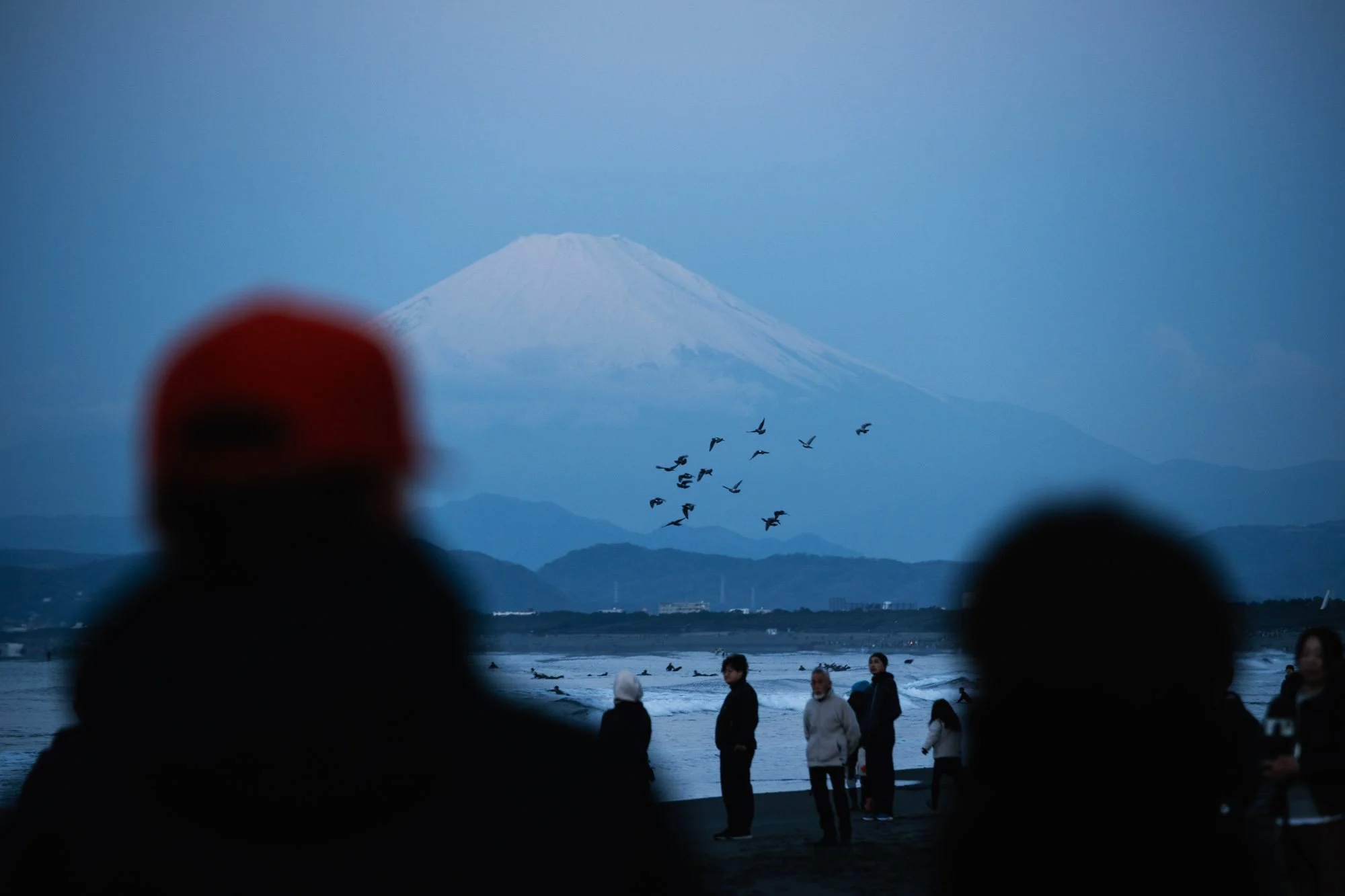
People gathered at Kugenuma Beach in Fujisawa in the early hours of January 1, 2026, to observe hatsuhinode, the Japanese tradition of viewing the first sunrise of the New Year.
Cultural traditions and creative renewal
I've observed hatsuhinode for several years now—sometimes with family, sometimes alone, and always with cameras in hand. As a Japan travel photographer, I file select images with the AFLO picture agency, as New Year sunrise photos from Japan tend to sell well to editorial clients. These images are part of my larger project of cultural documentation, capturing authentic Japanese traditions as they unfold.
I also use the experience as a way to start the New Year with a creative challenge: to practice seeing in new ways, to refine my editorial photography skills, and to take stock of what I achieved last year and what I want to focus on in the year ahead.
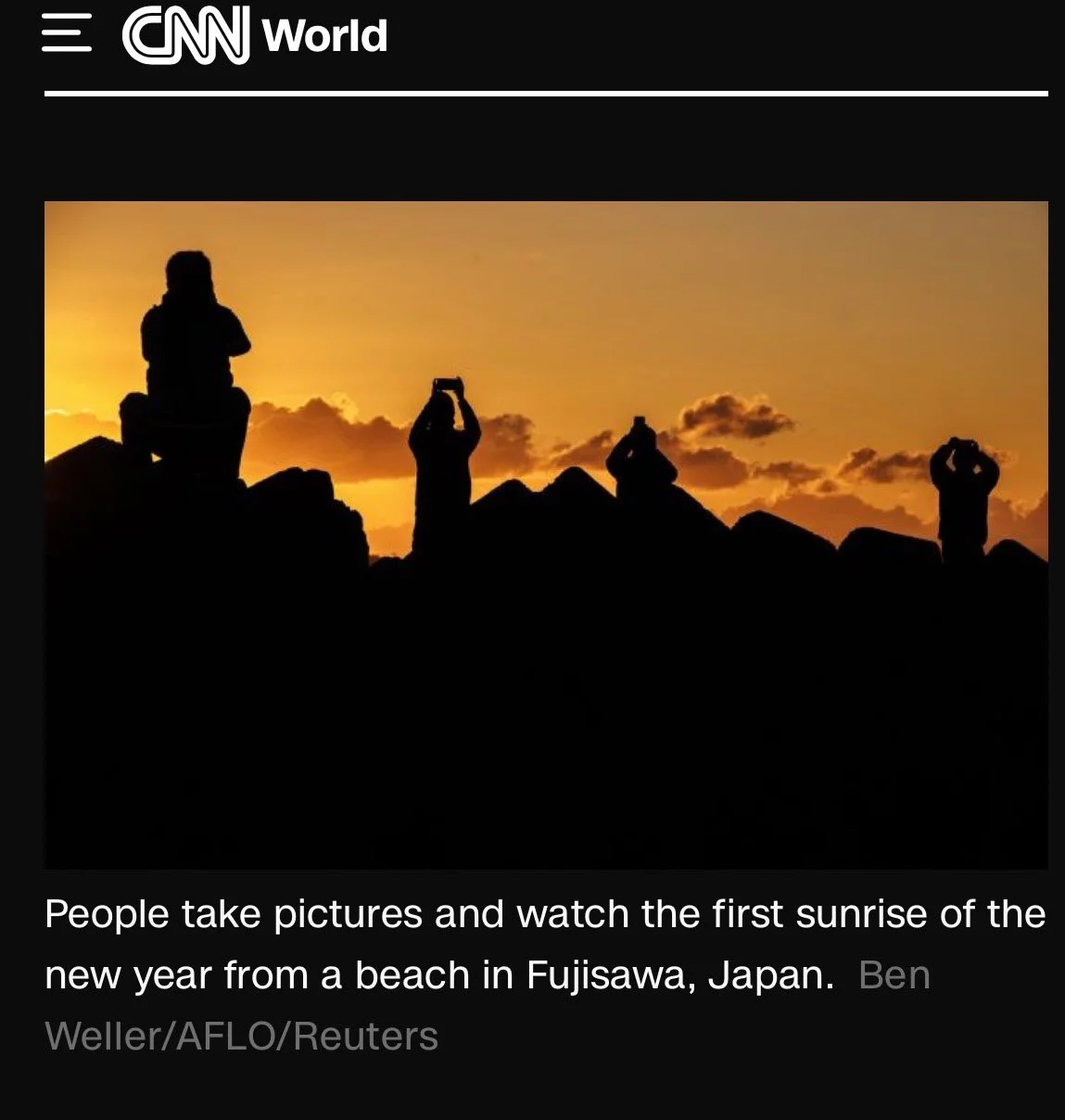
An image of hatsuhinode featured among images of New Year’s celebrations, published on CNN’s website.
This year was special: my mom was visiting from the States. She's an early riser and avid walker, so she enthusiastically agreed to join me on the pre-dawn trek to the beach. At 6 a.m. in the winter, you'd think the streets would be empty, but we joined a steady stream of walkers and cyclists making their way toward the shore.
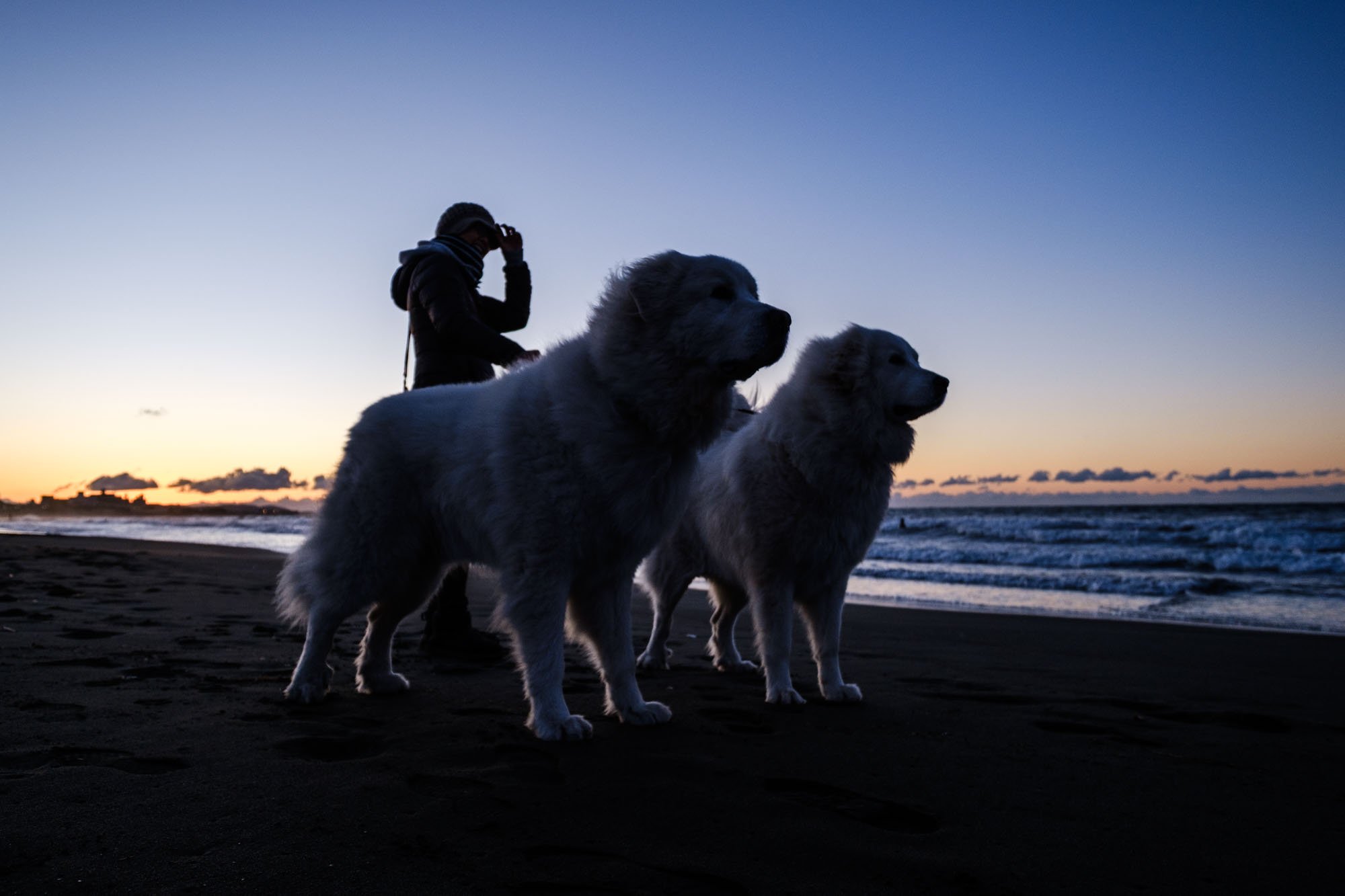
By the time we arrived at 6:30, the beach was already teeming with people: families, young couples, dog walkers, and surfers stretching on the sand or already out in the chilly water. There was a faint glow in the sky, and the towering outline of Mt. Fuji was slowly emerging from the darkness.
What I look for: storytelling through Japanese culture photography
I'm usually hunting for a few types of images at hatsuhinode. I want the sunrise, of course, but there's plenty to shoot in the pre-dawn darkness as well. There's anticipation in the air, a sense of community, a sense of optimism about the future.
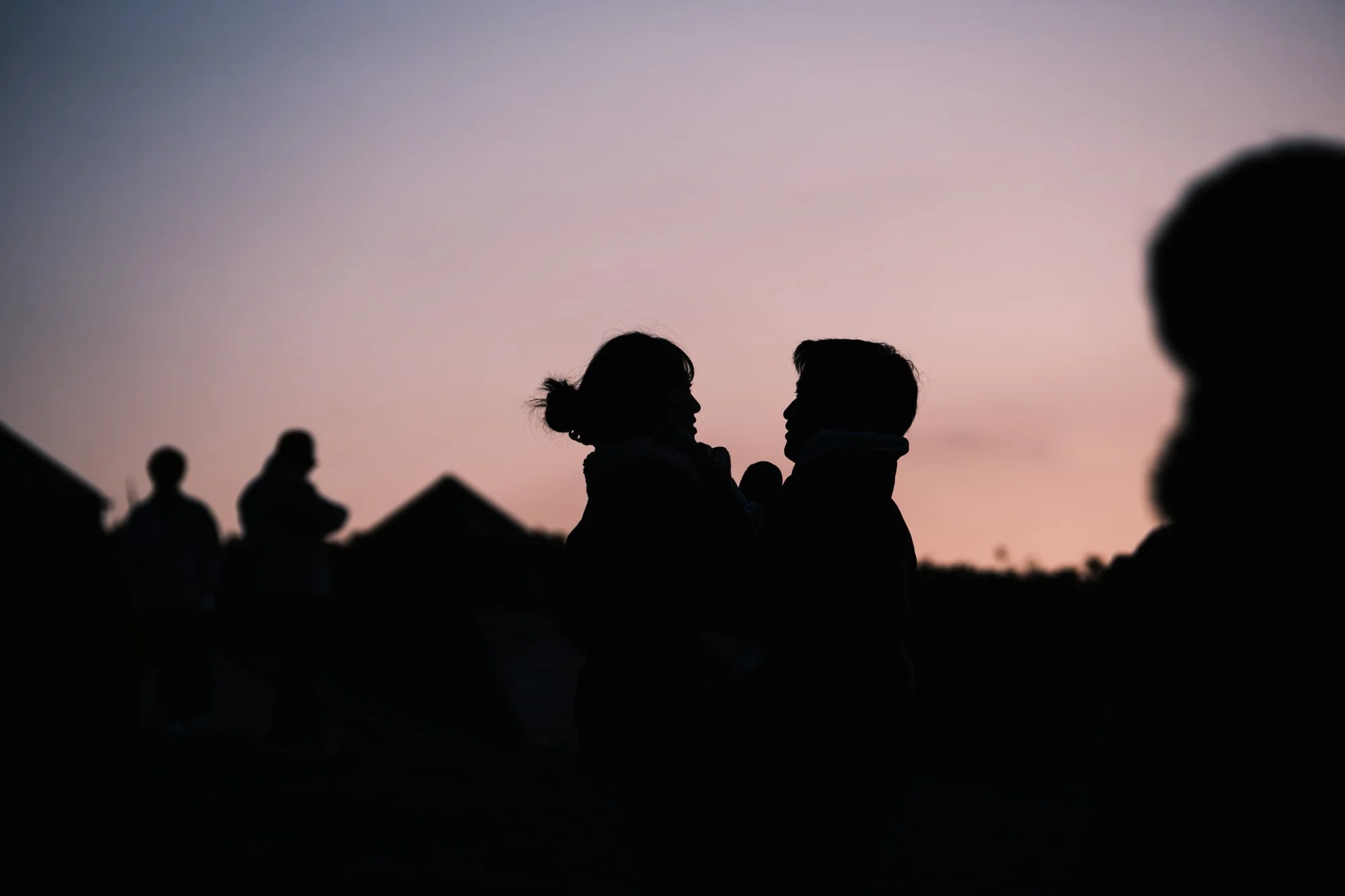
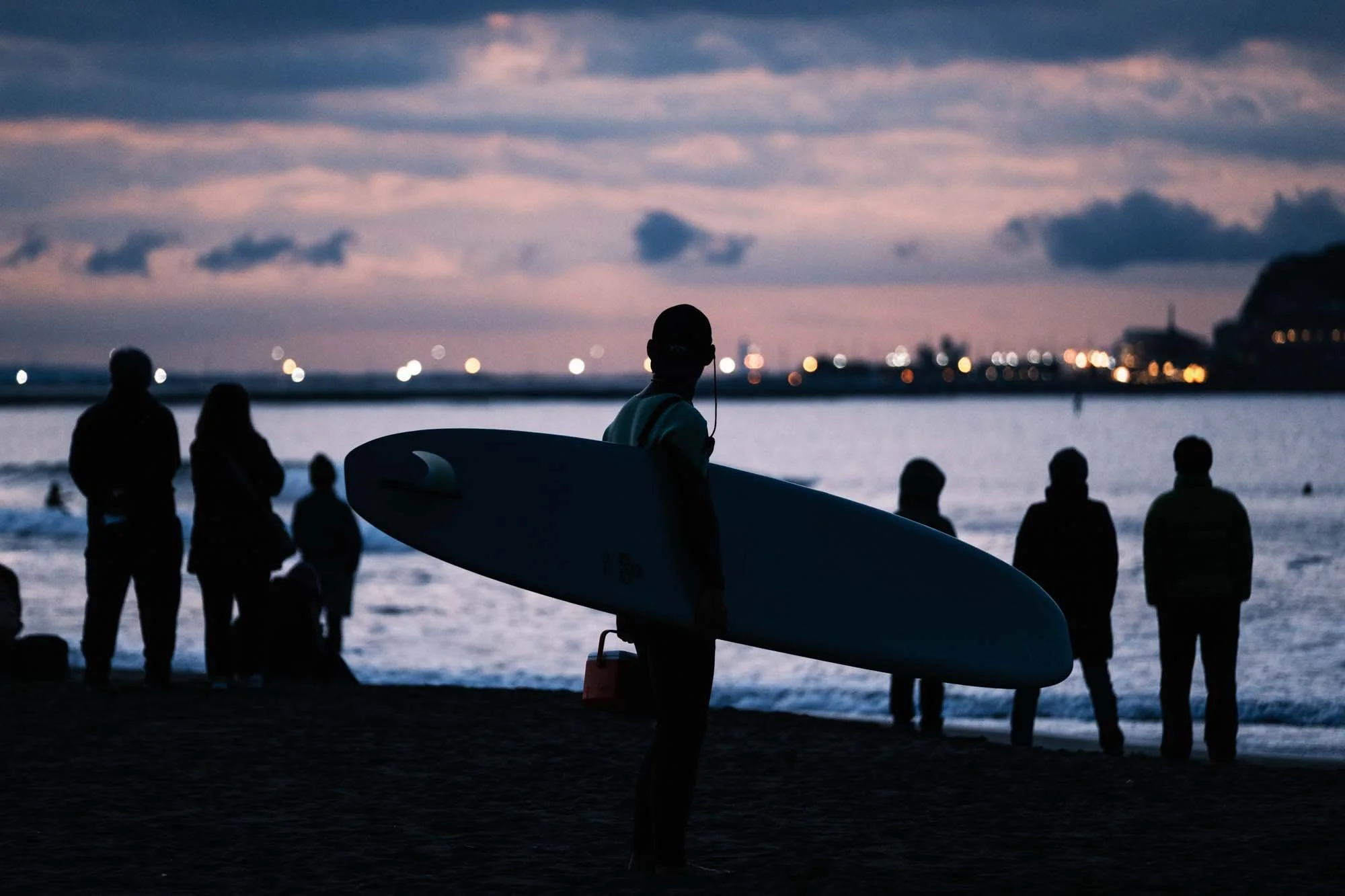
I'm looking for moments that capture these feelings—a dog playing in the sand, a couple embracing as they wait for the sunrise, a surfer scanning the waves. These are the human elements that make cultural documentation compelling and that magazine editors look for when they're illustrating stories about Japan.
Photography tips for shooting dawn and sunrise
Embrace the challenging light
The darkness presents challenges, but challenges are what drive creativity in photography. Understanding how to work with low light separates amateur snapshots from professional editorial work. Silhouettes are the obvious play here: get low, expose for the sky, and let your subjects fall into shadow. Use the light, don't fight it.
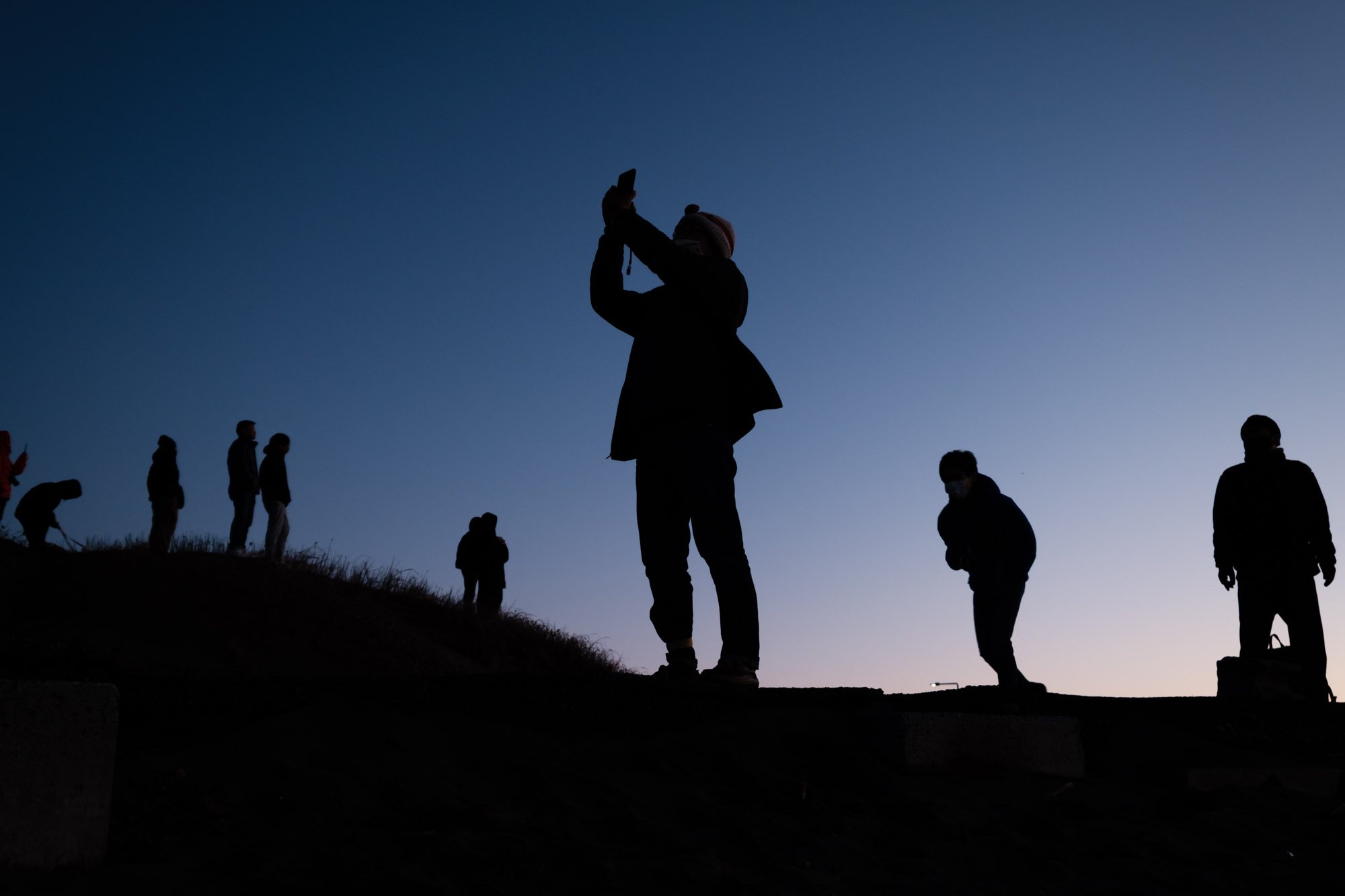
Use silhouettes in dawn photography to emphasize shapes and deal with the challenge of low-light photography.
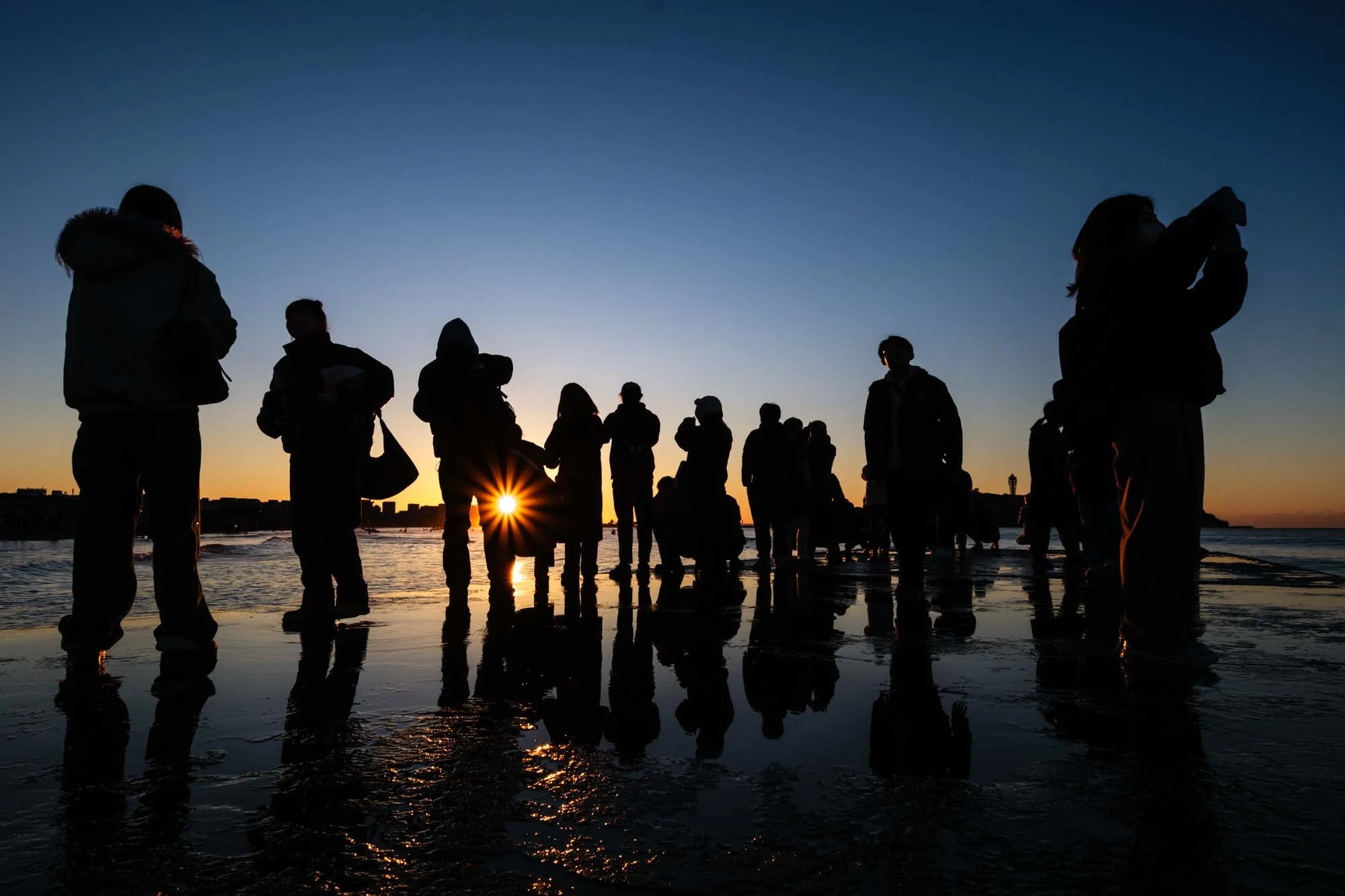
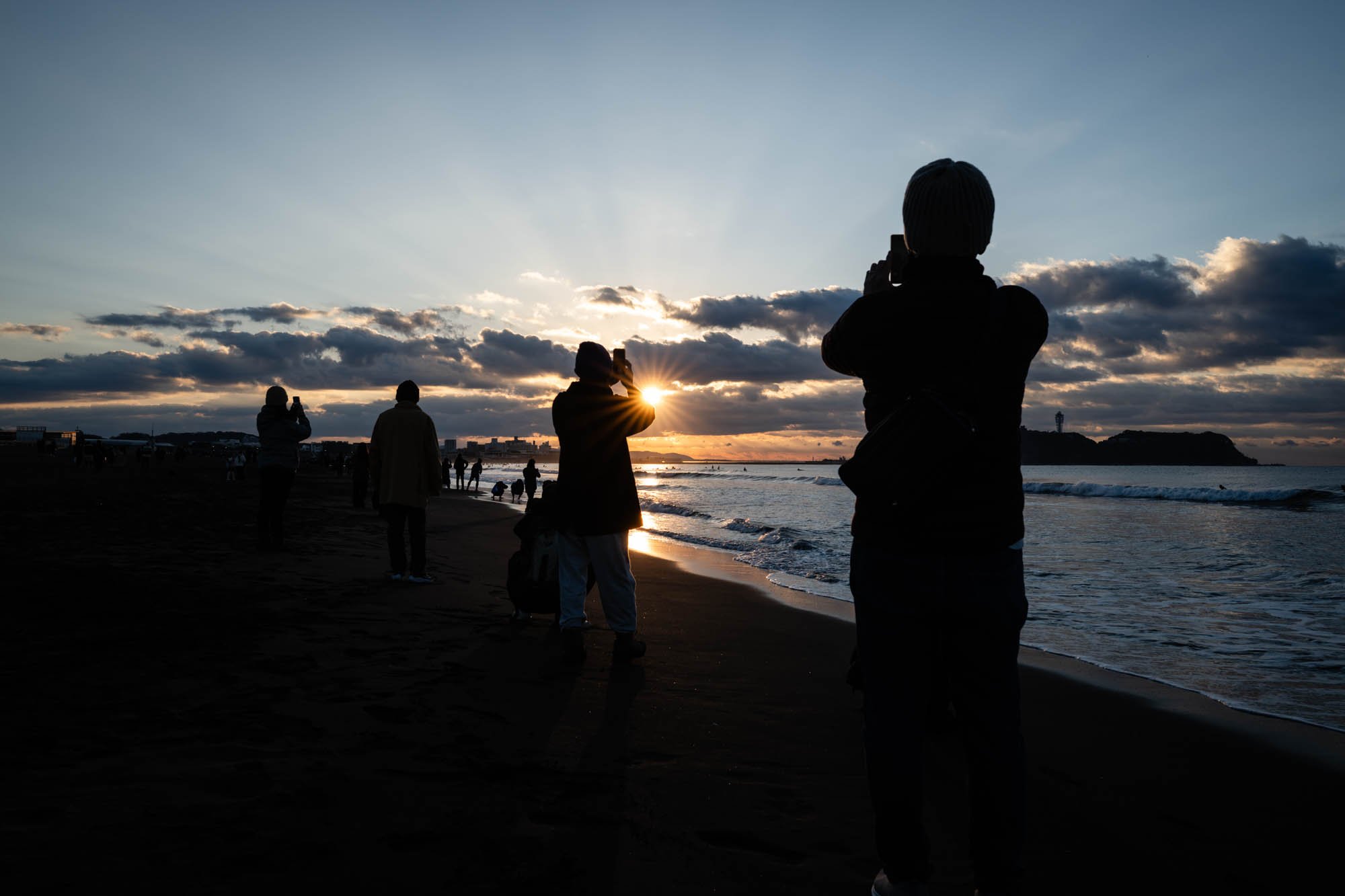
As the sun rises, stop down your aperture to f/11 or f/16 to create a sunburst effect. This works even better if you shoot behind people and let them partially obscure the sun, creating dynamic compositions that work well for travel photography portfolios.
2. Dial in your camera settings for low-light photography
The light changes rapidly at sunrise, so I have my cameras set up exactly how I want them before I leave the house to avoid fumbling with settings in the cold darkness. This kind of preparation is essential for professional work.
Since I'm photographing people in motion, I keep my shutter speed fast enough—usually between 1/250 and 1/500. Faster if I'm capturing surfers. I use auto ISO and don't worry if it climbs high; modern cameras handle noise remarkably well, and clients care more about capturing the moment than pixel-level perfection.
I'll have a custom bank set on my cameras to quickly switch to a slower shutter speed so I can capture intentional blur to convey movement—for example, a surfer running into the water or waves crashing dramatically on the shore.
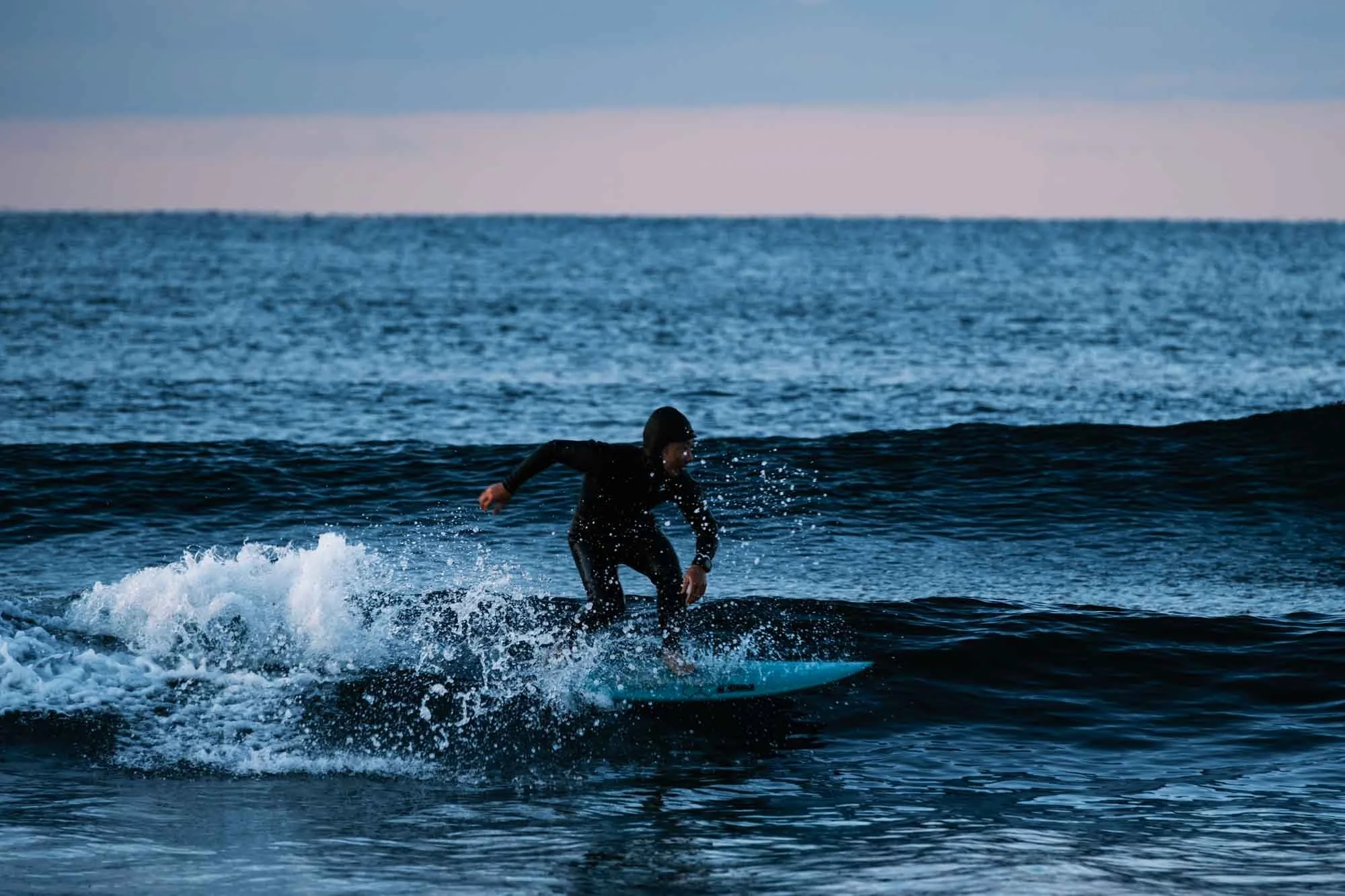
Shooting surfers at dawn requires a fast shutter speed, wide aperture, high ISO, and accurate auto-focus.
3. Master focus in low light
Your camera needs contrast to lock focus, so look for edges and areas of definition to use as focus points. The horizon line, silhouettes against the sky, or the bright glow of the pre-dawn sky all provide good contrast for autofocus systems.
Invest in gear that can focus reliably in low light—it makes all the difference when you're working in near-darkness and moments are fleeting. This is especially important for professional editorial photography where you can't afford to miss critical shots.
4. Check the weather (but don't let it discourage you)
Always check the forecast before heading out, but don't be discouraged by clouds—as long as it's not completely overcast, clouds will add drama to your sunrise images. Partial cloud cover can create spectacular light shows, with rays breaking through gaps and illuminating the clouds from below in brilliant oranges and pinks. Some of my most striking hatsuhinode photographs have come from mornings with interesting cloud formations rather than perfectly clear skies. The key is having some breaks in the clouds where the sun can emerge and interact with the atmosphere.
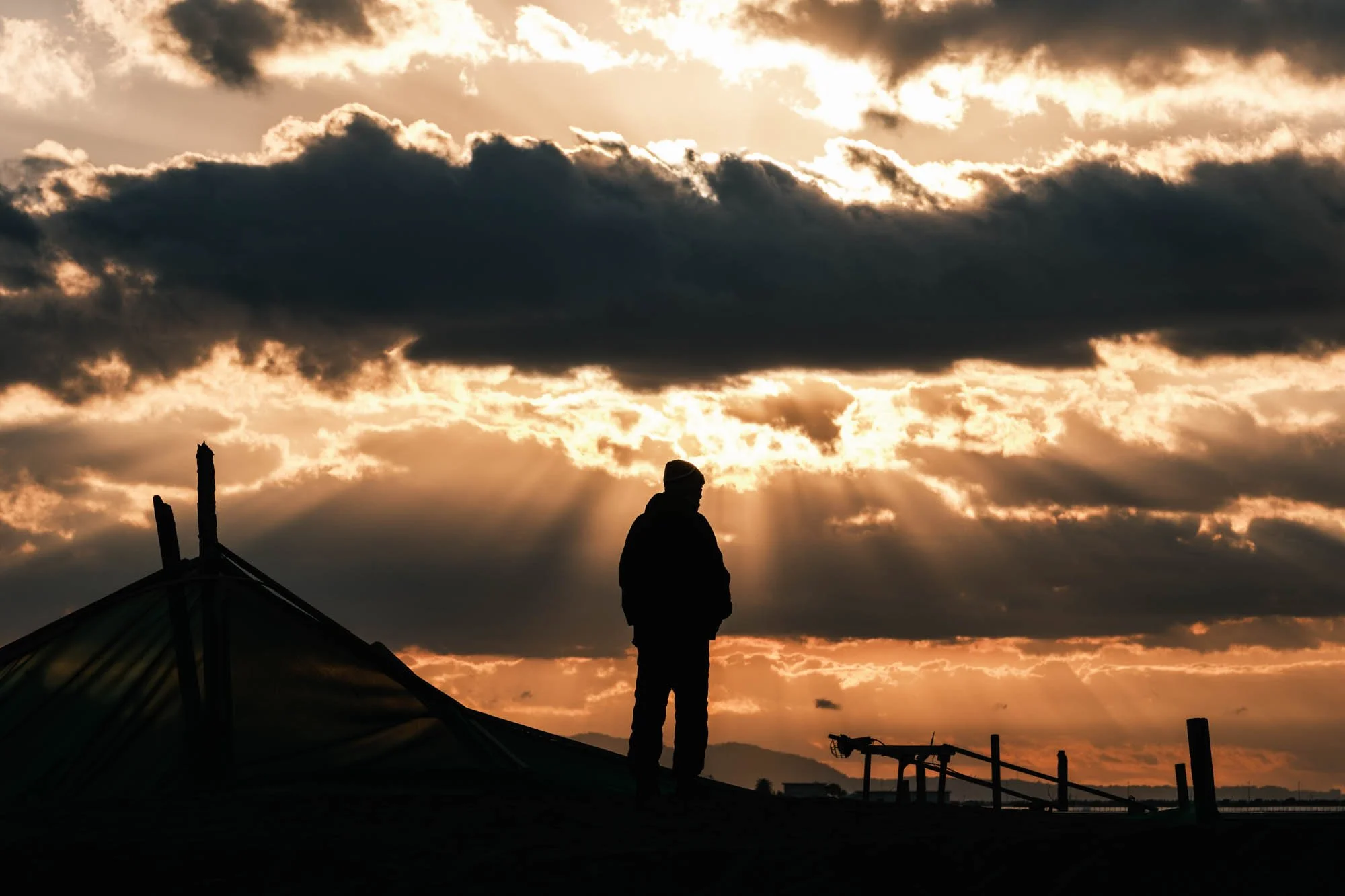
Clouds can create more dramatic images in sunrise photography.
Other prime hatsuhinode photography spots in Japan
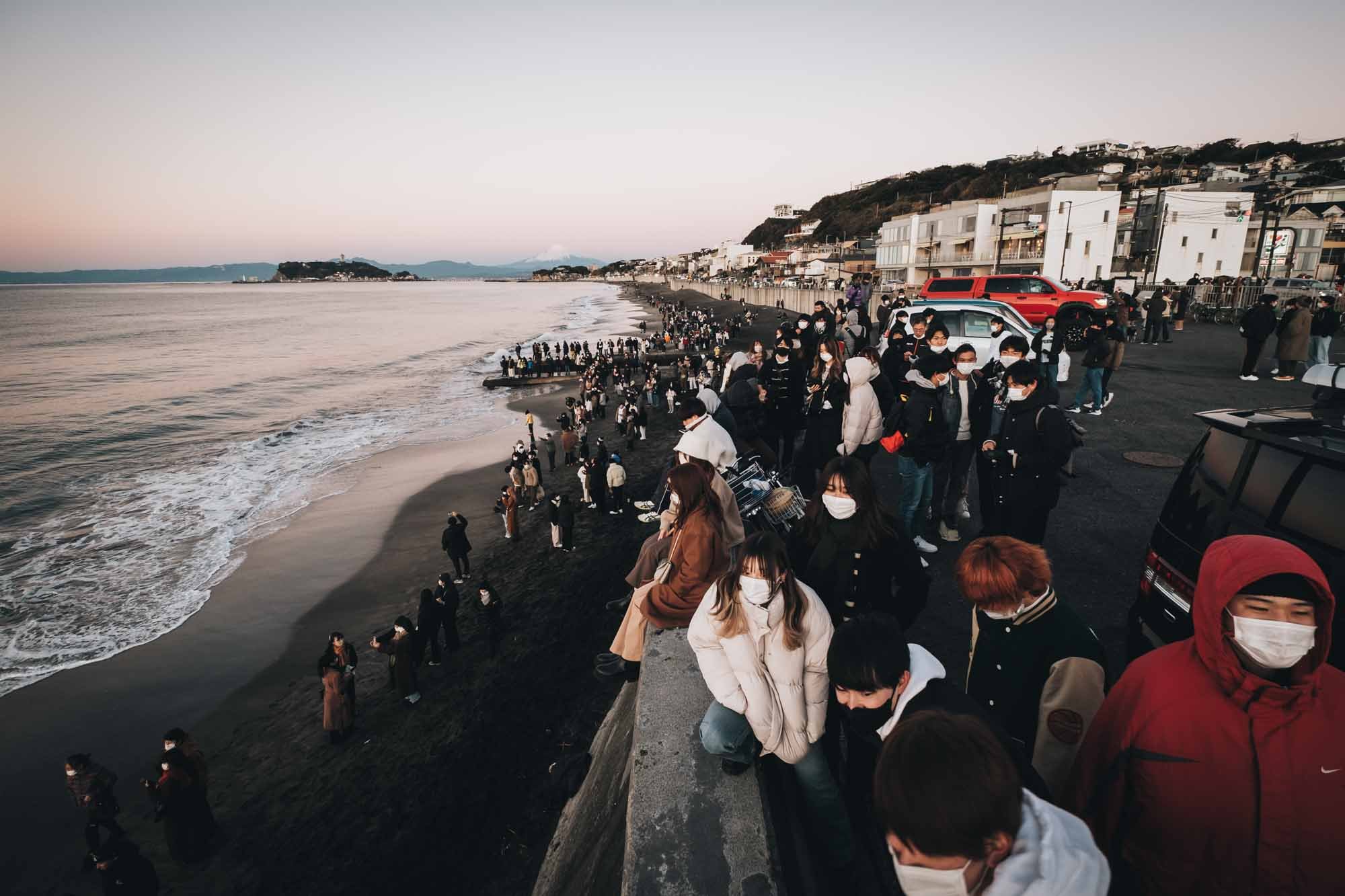
A crowd of people watching the sunrise at Shichirigahama Beach in Kamakura, Kanagawa Prefecture, Japan.
If you're not near Shonan, Japan offers countless spectacular locations for capturing the first sunrise. Here are a few standout spots for travel photographers:
Tokyo Skytree hosts a special limited-entry hatsuhinode event on New Year's Day, with spectacular elevated views of the sunrise over Tokyo. The observation decks at 350 and 450 meters offer unobstructed panoramas perfect for urban sunrise photography and Mt. Fuji views on clear days.
Cape Nosappu in Hokkaido offers some of the country's earliest New Year's sunrise views. The cape attracts many photographers and spectators, with the nearby museum distributing commemorative plaques and hosting taiko drum performances—great opportunities for cultural documentation.
Mount Takao near Tokyo combines spectacular sunrise views with cultural elements, featuring the famous Yakuo-in temple where many Japanese people gather annually for hatsuhinode. The Geikosai Festival adds an extra layer of cultural interest for editorial photography.
Cape Inubosaki in Chiba sees one of the earliest sunrises in eastern Japan (around 6:46 AM on January 1st), making it extremely popular with photographers. The coastal promenade and lighthouse area provide multiple vantage points.
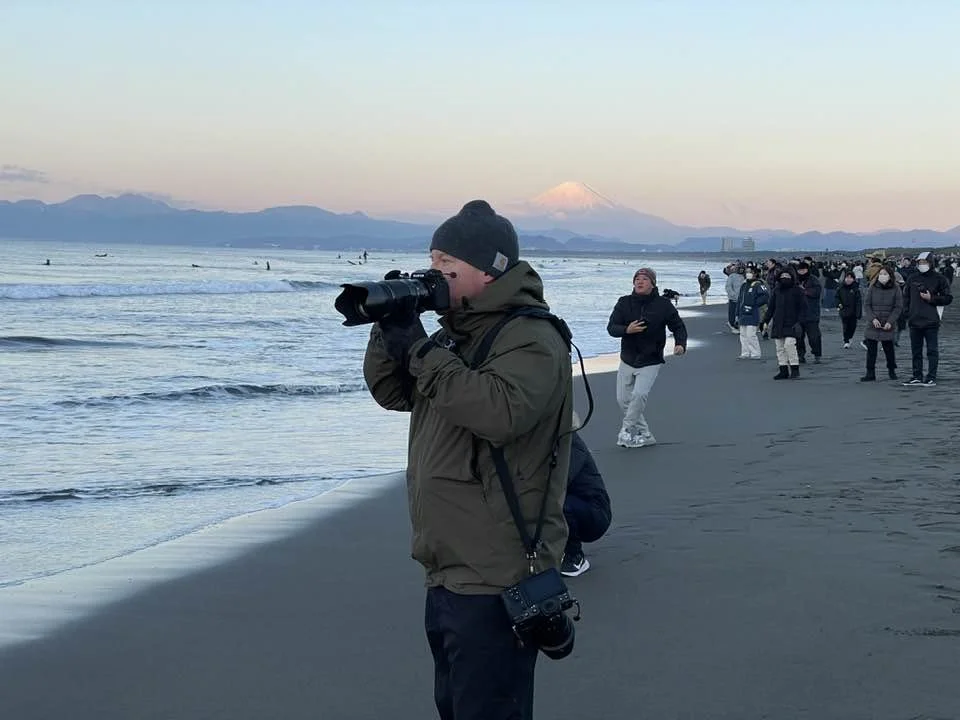
At work documenting hatsuhinode in Fujisawa, Japan, January 1, 2026. Photo by Susan Weller.
Whether you're on a beach, atop a mountain, or praying at a shrine, hatsuhinode offers more than just a photography opportunity. It's a moment of renewal, a connection to Japanese traditions, and a chance to document authentic cultural experiences, all while the world is bathed in the first golden light of a new year.
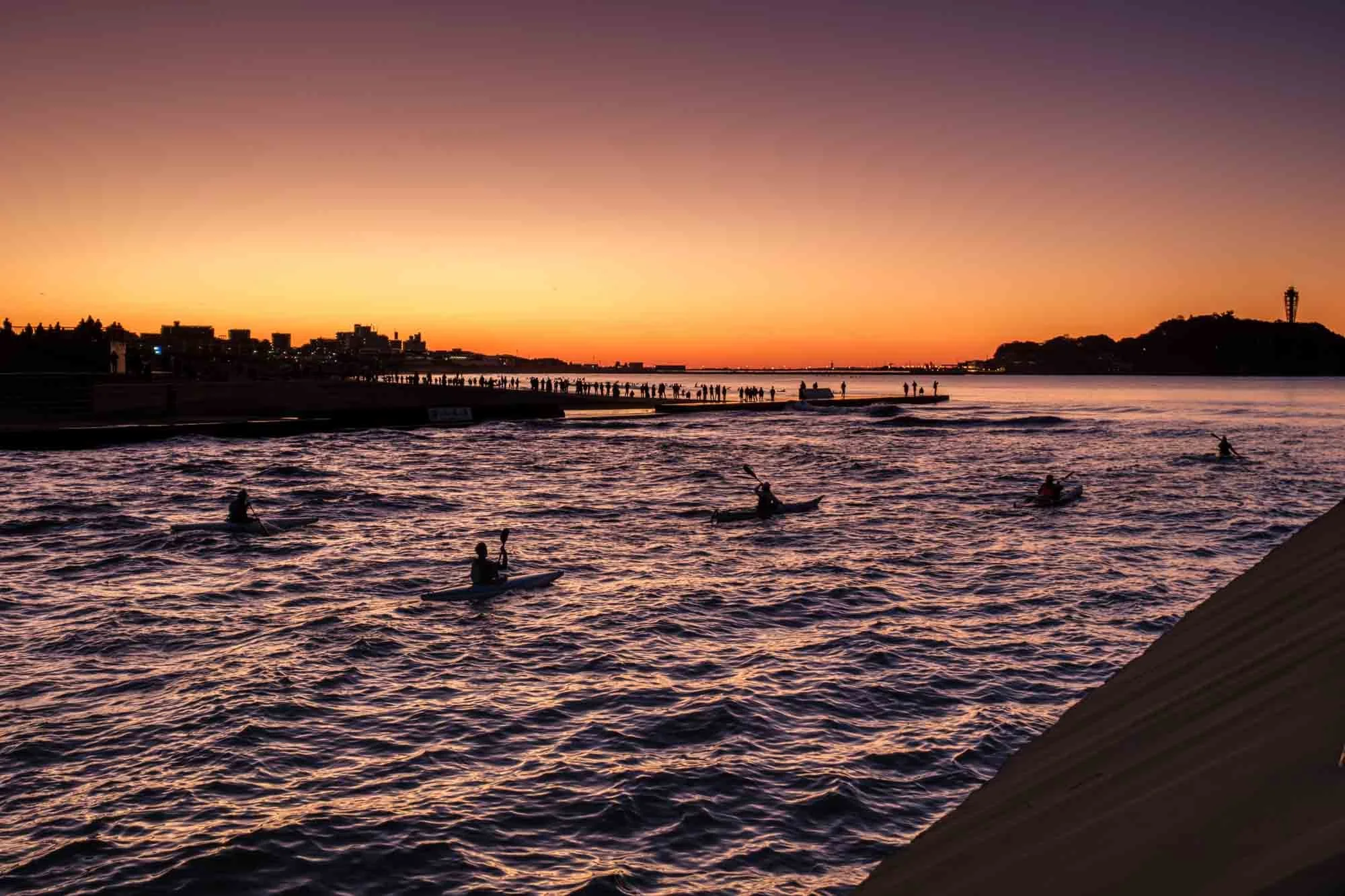
Kayakers paddle out to sea during hatsuhinode at Kugenuma Beach, Fujisawa, Japan.
I am an editorial and commercial photographer based near Tokyo. Contact me for assignments, stock photography licensing, or Japan travel photography services, or explore my portfolio of Japanese culture documentation and contemporary life in Japan.
All images © Ben Weller. All rights reserved.
No part of these photographs may be copied, reproduced, stored, or used in any form—digital or print—without the express prior written permission of the photographer.